
Map Headspace Gas Tester
- Home
- Packaging Testing Equipments
- Map Headspace Gas Tester

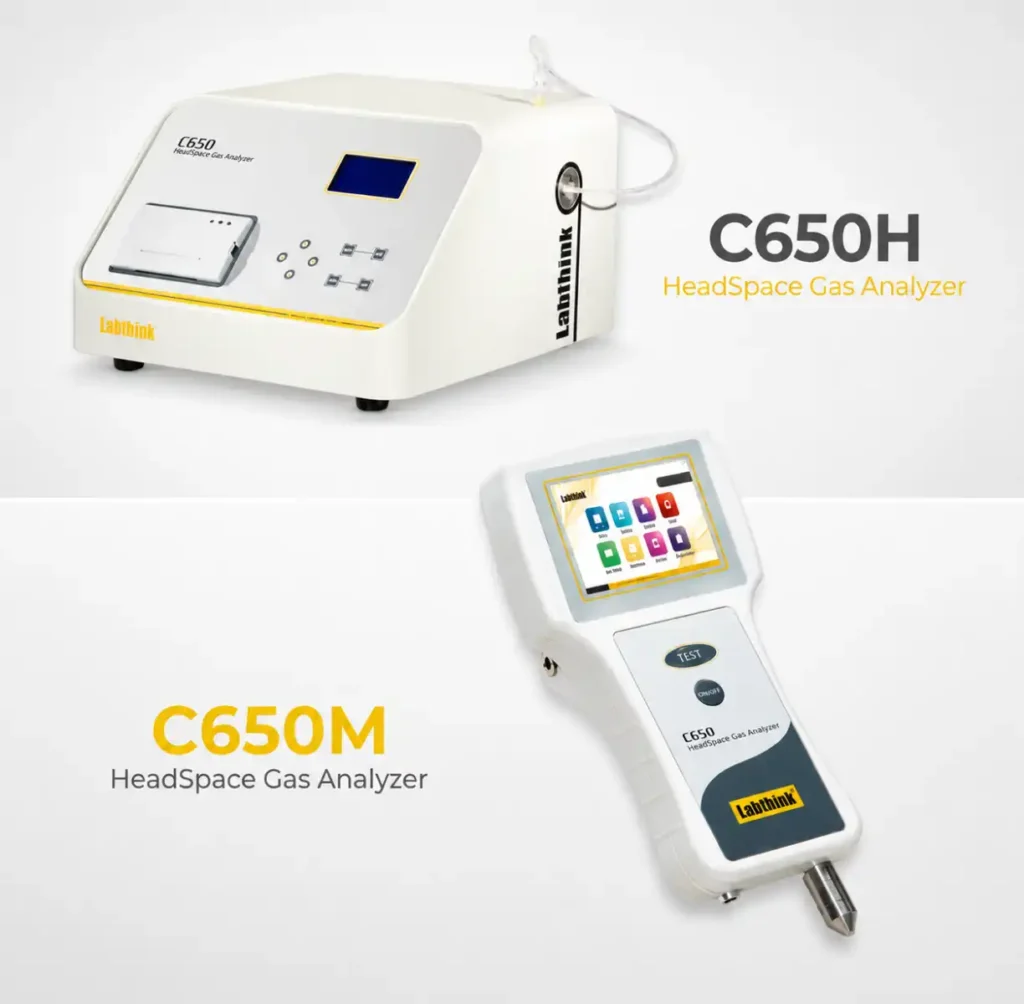
Ensure Freshness with Advanced Headspace Gas Testing!
It is a type of method used to analyse the composition of gases present within the headspace (air space) of a sealed package. This tester is commonly used in the food packaging industry to ensure the quality and safety of perishable products. MAP headspace gas testing, facilitated by instruments like headspace gas analyzers, is a crucial quality control measure in industries such as food packaging, pharmaceuticals, and cosmetics. It ensures product freshness, shelf life, and safety by monitoring and optimising the atmosphere within sealed packages.
Headspace Gas Analyzer C650H

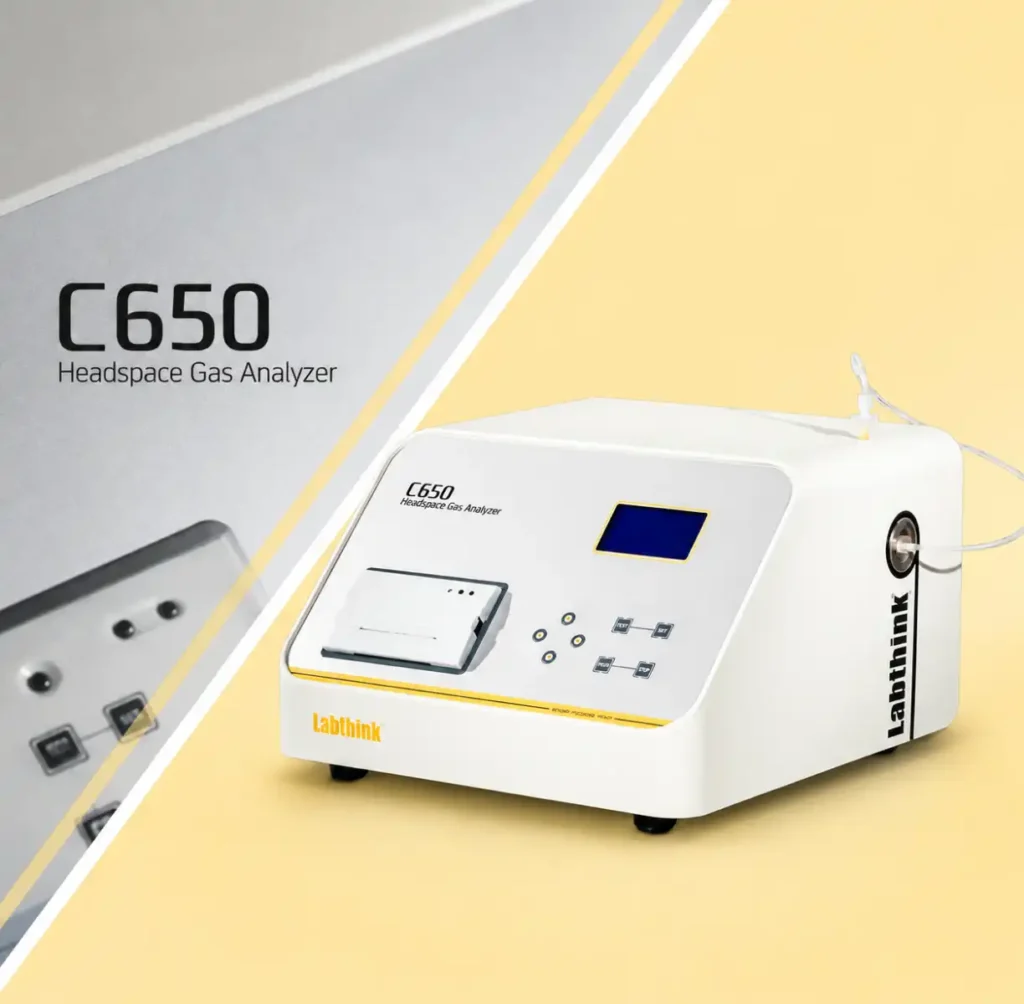
The C650H Headspace Gas Analyzer is used in the packaging industry to measure the levels of gases like oxygen and carbon dioxide within sealed packages. This ensures product freshness, quality, and extended shelf life by verifying that the packaging maintains the correct atmosphere to preserve the contents.
Submit Your Details to Download Brochure!

Features
- The instrument is controlled by micro-computer, which can analyse, process and transfer the test data and test report
- The built-in data storage function allows it to store a large amount of test data.
- Portable design allows operating the instrument in a laboratory or on a production site.
- Equipped with standard RS232 ports and professional software for convenient PC connection and data transfer
Headspace Gas Analyzer C650M

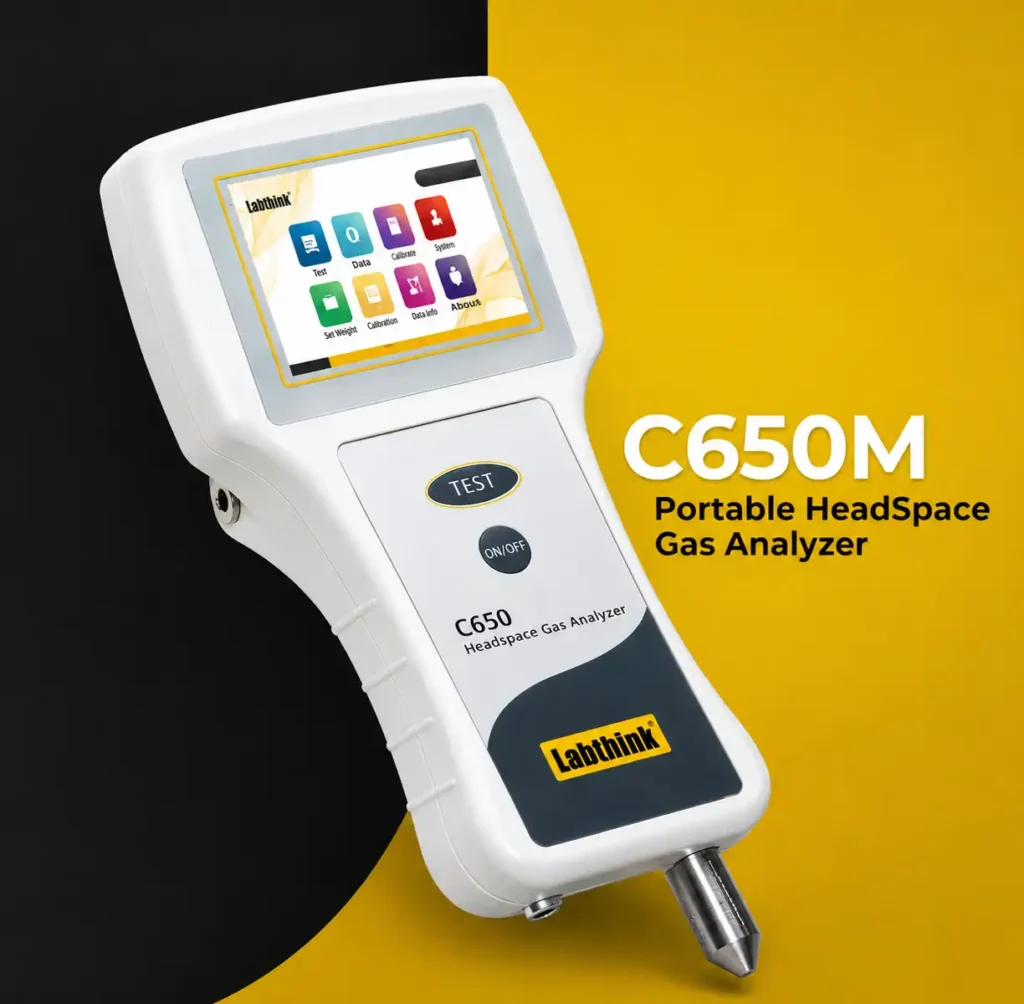

The C650M Headspace Gas Analyzer is integral to the packaging industry for assessing gas composition within sealed packages. By precisely measuring oxygen, carbon dioxide, and other gases, it ensures optimal conditions for product preservation, shelf life extension, and quality maintenance, crucial for food, pharmaceuticals, etc.
Submit Your Details to Download Brochure!
Features
- Handheld and portable design, easy-to-operate with one hand, suitable for tests on production line
- Auto shutdown for energy saving
- One-button calibration, simple and efficient
- Components and parts are supplied by global well-known manufacturers, which guarantee stable performance of the instrument
- Protective cover for sampling probe to ensure the safety of the operator
- Embedded gas sensors for accurate analysis of the gas contents inside flexible or rigid packages
- Embedded pressure sensor for accurate determination of the vacuum degree inside the package
- CO2 sensor uses NDIR technology, patented solid state LED, detector and gold-plated optic components
Select the right product for your specific requirements
Compare Labthink headspace gas analyzer models by measurement range, accuracy, sampling volume, and form factor.
| Specification | Unit | C650H | C650M |
|---|---|---|---|
| General | |||
| Form factor | Benchtop | Handheld / Portable | |
| Display | LCD, menu interface | Industrial touch screen (CN / EN) | |
| Data storage | Built-in | Up to 1,200 results | |
| Output / Interface | RS232 + micro printer | Auto storage, power-failure memory | |
| Standard compliance | ASTM F2714 | ASTM F2714 | |
| O₂ Measurement | |||
| O₂ test principle | Fluorescent decay | Electrochemistry | |
| O₂ measurement range | % | 0.2 – 21 | 0 – 100 |
| O₂ accuracy | % | ±0.2 | ±0.2 |
| O₂ resolution | % | — | 0.01 |
| O₂ sensor life | — | ~2 years (in air) | |
| O₂ sampling volume | mL | ≥ 5 | < 2 (std mode) |
| CO₂ Measurement (Optional) | |||
| CO₂ test principle | NDIR (infrared) | Infrared absorption | |
| CO₂ measurement range | % | 2 – 100 | 0 – 100 |
| CO₂ accuracy | ±2% | ±(0.03% + 5% of reading) | |
| CO₂ resolution | % | — | 0.01 |
| CO₂ sensor life | — | > 15 years | |
| CO₂ sampling volume | mL | ≥ 20 | 15 (std mode) |
| Physical | |||
| Dimensions (L × W × H) | mm | 350 × 330 × 200 | 220 × 110 × 70 |
| Net weight | kg | 5.5 | 0.6 |
| Electrical | |||
| Power supply | 220 VAC 50 Hz / 120 VAC 60 Hz | 220 VAC ±10% 50 Hz / 120 VAC ±10% 60 Hz | |
* CO₂ measurement is optional on both models. Specifications are nominal and subject to final configuration.
* CO₂ measurement is optional on both models.
FAQ's
Frequently Asked Questions – MAP Headspace Gas Testing
What is MAP headspace gas testing and why is it important for packaging?
MAP (Modified Atmosphere Packaging) headspace gas testing measures the concentration of oxygen and carbon dioxide inside sealed packages. It verifies that the correct gas mixture was introduced during packaging. Accurate headspace analysis per ASTM F2714 is essential for food, pharmaceutical, and medical device manufacturers to confirm shelf life, prevent spoilage, and ensure product safety throughout the supply chain.
Which gases are measured during MAP headspace gas analysis?
MAP headspace gas analysis primarily measures oxygen (O2) and carbon dioxide (CO2) concentrations inside sealed packages. Oxygen levels are measured per ASTM F2714 using fluorescent decay technology. Controlling O2 below critical thresholds prevents oxidation and microbial growth, while CO2 inhibits bacterial activity. Nitrogen (N2) is also used as a filler gas to displace oxygen in MAP food and pharmaceutical packaging.
What is the ASTM F2714 standard and how does it apply to headspace gas testing?
ASTM F2714 is the standard test method for oxygen headspace analysis of sealed packages using fluorescent decay. It applies directly to MAP packaging where the oxygen content of the headspace determines the protection provided by barrier materials. Testing per ASTM F2714 measures residual oxygen in closed packages, supports package permeability studies, and helps manufacturers validate shelf life for food, chemical, and pharmaceutical products.
What is the difference between destructive and non-destructive headspace gas testing?
Destructive headspace testing, as covered by ASTM F2095, involves piercing or pressurising the package to measure gas composition or detect leaks — the tested package cannot be reused. Non-destructive methods per ASTM F2338 use vacuum decay or fluorescent sensors to detect leaks without damaging the package. For production line quality control, non-destructive methods allow larger sampling without product loss, while destructive methods are used for detailed laboratory validation.
What is ASTM F2095 and when is it used in MAP packaging quality control?
ASTM F2095 covers pressure decay leak testing for flexible packages including nonporous film, foil, and laminate pouches and foil-sealed trays. It is used to detect seal failures and micro-leaks in MAP packaging that could allow oxygen ingress and compromise product shelf life. When testing medical packaging that must conform to ISO 11607 standards, ASTM F2095 pressure decay results may need to be verified with additional integrity test methods.
How does a MAP headspace gas analyser work in practice?
A MAP headspace gas analyser uses a hollow needle probe inserted through the package film to extract a micro-sample of headspace gas. Sensors — typically electrochemical for O2 and infrared (NDIR) for CO2 — measure gas concentrations in seconds. Testing follows ASTM F2714 for oxygen analysis. Results are displayed as percentage concentrations, allowing operators to verify correct gas flushing, detect seal failures, and confirm compliance with product-specific MAP specifications.
Which industries use MAP headspace gas testing equipment?
MAP headspace gas testing is used across food packaging (meat, seafood, dairy, bakery, produce), pharmaceutical packaging (blister packs, vials, ampoules), and medical device packaging (sterile barrier systems per ISO 11607). It is also used in nutraceutical packaging, coffee packaging with one-way valves, and specialty chemical packaging where oxygen and moisture control are critical for maintaining product quality and regulatory compliance.
How is headspace gas testing used for pharmaceutical and medical device packaging?
In pharmaceutical and medical device packaging, headspace gas testing verifies residual oxygen levels to ensure product stability and sterility. ISO 11607 requires that sterile barrier packaging systems maintain integrity through their claimed shelf life. Headspace analysis per ASTM F2714 supports shelf life validation studies, and leak testing per ASTM F2095 provides physical evidence of package integrity — both required for FDA and regulatory submissions.
How often should MAP headspace gas testing be performed on a production line?
Testing frequency depends on production volume, risk level, and regulatory requirements. Most food and pharmaceutical manufacturers perform headspace gas analysis on a statistical sampling basis — typically one package per batch or per defined production interval. For high-risk products such as sterile medical devices or injectable pharmaceutical packaging under ISO 11607, more rigorous sampling plans are required, with results documented as part of process validation and quality management records per ISO 17025.
How should a MAP headspace gas analyser be calibrated and maintained?
MAP headspace gas analysers must be calibrated regularly using certified reference gas mixtures traceable to national standards to ensure measurement accuracy. Calibration records must be maintained per ISO 17025 requirements for laboratory competence. Sensors — electrochemical O2 sensors and infrared CO2 sensors — have defined operational lifespans and must be replaced as per the manufacturer’s schedule. Regular calibration ensures compliance with ASTM F2714 and maintains traceability for regulatory submissions.
Related Machines

Buy Sartorius MA160 & MA100 halogen moisture analysers in India. Accurate loss-on-drying testing for packaging, plastics and pharma, with free installation.
View Details →
BINDER M115 drying and heating chamber, 115 litre, for conditioning and drying packaging samples before mechanical or barrier testing.
View Details →
BINDER VD 56 vacuum drying chamber, 56 litre, for gentle low-temperature drying of heat-sensitive packaging samples and residues.
View Details →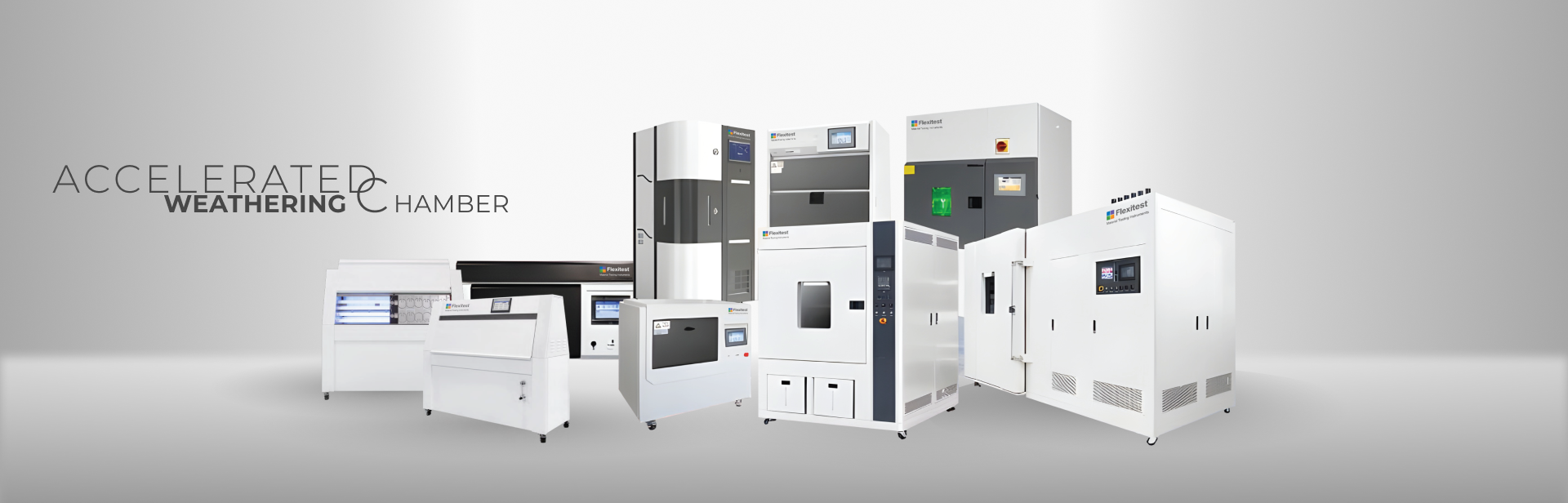
UV and xenon accelerated weathering chambers that replicate sunlight, heat and moisture so packaging materials are proven before launch.
View Details →


