
Melt Flow Indexer
- Home
- Plastic and Polymer
- Melt Flow Indexer- Plastic and Polymers
Melt Flow Testing: The Foundation of Reliable Plastic Solutions
In the plastic and polymer industry, the Melt Flow Indexer is like testing a material’s “flexibility” in molten form. It helps to understand the flow properties of a thermo plastic elastomer. It measures how easily melted plastic flows through a tiny orifice under specific heat and pressure. This flow rate helps manufacturers understand the material’s viscosity, predicting how it will behave during molding or extrusion. By knowing this, they can ensure the plastic fills molds seamlessly, creating high-quality products without defects.
It also aids in customizing materials for specific applications by tweaking flow properties to meet unique requirements. Ultimately, the Melt Flow Indexer is an essential tool that saves time and resources by preventing production hiccups, helping manufacturers deliver reliable and efficient products to the market.
Melt Indexers MP 1200


MP 1200 measures the melt flow rate of thermoplastic materials under controlled temperature and load. Use it to compare material batches and check suitability for moulding or extrusion. Manual and motorised configurations are available; ask Flexitest which setup and accessories suit your materials and test method.
Submit Your Details to Download Brochure!
Features
- Three-zone band heater
- Touch-screen control
- Quick die release
- USB connectivity
- Tapered weight design
- Powerful data analysis and control software
Customized Solutions for Melt Flow Indexer
Complete technical specifications for the MP 1200 Melt Flow Indexer — temperature control, transducer accuracy and physical dimensions.
← Swipe to see all specifications →
| Specification | Value / Range |
|---|---|
| Conformance & Standards | |
| Conformance | ASTM D1238 & D3364 · ISO 1133-1 & -2 · BS2782 · DIN 53735 · JIS K7210 |
| Temperature | |
| Operating temperature | 410°C max. |
| Temperature control | ±0.1°C |
| Spatial temperature variation | ±0.1°C |
| Temperature controller | Three-zone PID |
| Temperature sensors | Platinum RTDs (3) |
| Timing | |
| Displayed capture time | 0.01 second |
| Internal timing interval | 0.001 second |
| Display & Data | |
| Display | 7.1″ LCD touchscreen · 800 × 480 resolution |
| Data entry | Touchscreen display |
| Communications port | USB |
| Weights | |
| Weight material & tolerance | Stainless steel or Aluminium · ±0.5% tolerance |
| PPDT-1200 Actuating Switch | |
| Transducer accuracy | ±0.001 in (ASTM) · ±0.02 mm (ISO) |
| MWLD-1200 Motorised Weight Support | |
| Transducer accuracy | ±0.1 mm (±0.01 in) |
| Physical | |
| Overall dimensions — basic unit (W×D×H) | 458 mm / 18 in × 394 mm / 15.5 in × 521 mm / 20.5 in |
| Overall dimensions — motorised unit (H) | 762 mm / 30 in (to top of weight cage, platform lowered) |
| Net weight — basic unit | 21 kg / 46 lb |
| Net weight — motorised unit | 32 kg / 71 lb |
| Gross weight — basic unit | 32 kg / 70 lb |
| Gross weight — motorised unit | 43 kg / 95 lb |
Weights not included in listed mass figures. Basic and motorised unit weights exclude test weights and optional accessories. Confirm the full configuration with Flexitest before ordering.
We'll confirm the latest configuration, accessories and applicable test standards with your quotation.
FAQ's
Frequently Asked Questions (FAQs) – Common questions from QC managers, procurement officers, and R&D teams.
What Melt Flow Indexer models does Flexitest supply for plastic and polymer testing?
Flexitest supplies two Tinius Olsen Melt Flow Indexer models: the MP600 Extrusion Plastometer for standard MFR measurement per ASTM D1238 and ISO 1133; and the MP1200 / MP1200M – available in manual (MP1200) and motorised (MP1200M) configurations, with three-zone band heater, colour touchscreen, programmable piston displacement transducer (PPDT) for MVR testing, optional automatic cutter, and Tinius Olsen Horizon software for unlimited test storage and SPC reporting. Both comply with ASTM D1238 (Procedures A, B, C, D) and ISO 1133-1 & 2.
What is a Melt Flow Index (MFI) and why is it important for plastic processing?
The Melt Flow Index (MFI) – also called Melt Flow Rate (MFR) – measures the mass of polymer in grams flowing through a standard die (2.095 mm diameter) in 10 minutes under a specified temperature and load, expressed as g/10 min per ASTM D1238 / ISO 1133. It is the primary quality control parameter for thermoplastic resins because it indicates viscosity, molecular weight, and processability. High MFI = lower molecular weight = easier flow (injection moulding). Low MFI = higher molecular weight = better melt strength (extrusion, blow moulding). Every resin datasheet specifies an MFI value – batch-to-batch MFI consistency confirms the resin grade has not changed or degraded.
What plastics and resins can be tested - and to which standards?
ASTM D1238 Procedure A (Manual Cut Method) is the gravimetric method – the operator manually cuts extrudate samples at timed intervals and weighs them to calculate the Melt Mass Flow Rate (MFR) in g/10 min. It is the standard routine QC method. ASTM D1238 Procedure B (Automatically Timed Flow Rate) uses an encoder-based Programmable Piston Displacement Transducer (PPDT) to automatically measure piston displacement over time — calculating both MFR (Melt Mass Flow Rate) and MVR (Melt Volume Flow Rate, cm³/10 min) without manual cutting. Procedure B is more automated, more repeatable, and required when both MFR and MVR are needed. The Tinius Olsen MP1200 with PPDT performs both procedures. The international equivalent procedures are defined in ISO 1133-1 (Procedure A) and ISO 1133-2 (Procedure B).
What is MVR and when should it be measured instead of MFR?
MFR (Melt Mass Flow Rate) is measured in g/10 min per ASTM D1238 Procedure A / ISO 1133-1 – the standard for most commodity resin QC. MVR (Melt Volume Flow Rate) is measured in cm³/10 min per ASTM D1238 Procedure B / ISO 1133-2 using the PPDT – it measures the volume of polymer extruded rather than mass. MVR is preferred when comparing resins of different densities (e.g., filled vs unfilled grades), characterising recycled polymers with variable density, or when the resin supplier specifies MVR on the material datasheet. MVR is also used to calculate Melt Density from the ratio of MFR to MVR. The Tinius Olsen MP1200M with PPDT reports both MFR and MVR simultaneously in a single test.
What plastics can be tested with the Tinius Olsen MFI and at what test conditions?
The MP600 and MP1200 cover all common thermoplastic resins per ASTM D1238 / ISO 1133 standard test conditions: Polyethylene (PE) – 190°C / 2.16 kg (ASTM D1238 Condition 190/2.16); Polypropylene (PP) – 230°C / 2.16 kg; ABS – 220°C / 10 kg; Polycarbonate (PC) – 300°C / 1.2 kg; Nylon PA6/PA66 – 275°C / 0.325 kg; PET – 250°C / 2.16 kg; PMMA – 230°C / 3.8 kg; POM (Acetal) – 190°C / 2.16 kg. The MP1200’s three-zone band heater achieves precise temperature control across the full range – essential for high-temperature engineering resins like PC and Nylon where temperature uniformity directly affects result accuracy per ISO 1133-2.
What is the Tinius Olsen Horizon software and what does it do for MFI testing?
Tinius Olsen Horizon software integrates with the MP1200M to provide: unlimited storage of test settings and results; user-configurable test reports in PDF, Excel, and LIMS-compatible formats; SPC (Statistical Process Control) charts for batch-to-batch MFR/MVR trend monitoring; method libraries with standard-specific test routines for ASTM D1238 and ISO 1133; and automatic calculation of Flow Rate Ratio (FRR) – the ratio of MFR at two different loads on one charge, which characterises molecular weight distribution per ASTM D1238 Procedure C/D. Horizon software transforms the MFI instrument from a single measurement device into a complete resin QC documentation system. Flexitest configures Horizon with your resin-specific methods and report formats at installation.
How does MFI testing support incoming raw material QC and supplier qualification?
Every batch of plastic resin received from a supplier should be tested against the MFI specification on the material datasheet per ASTM D1238 / ISO 1133 before it enters the process. An MFI value outside specification indicates: a different molecular weight grade was supplied; the resin was degraded during transport or storage; or contamination has occurred — any of which will cause processing problems and defective parts. Documented MFI test records on incoming batches provide: traceable evidence of raw material conformance for IATF 16949 and ISO 9001 quality systems; supplier qualification data for OEM customer submissions; and the baseline MFR/MVR data needed to detect long-term supplier drift before it reaches production.
Related Machines

Halogen Moisture Analyser MA - 160 measures moisture content in automotive plastics, textiles and powders by loss on drying.
View Details →
Compare IT503 and IT504 low-energy impact testers for Charpy and Izod testing of plastics. Ask Flexitest for help choosing your test configuration.
View Details →
HDT and Vicat softening point tester determines heat deflection temperature and softening point of plastics to ISO 75 and ISO 306.
View Details →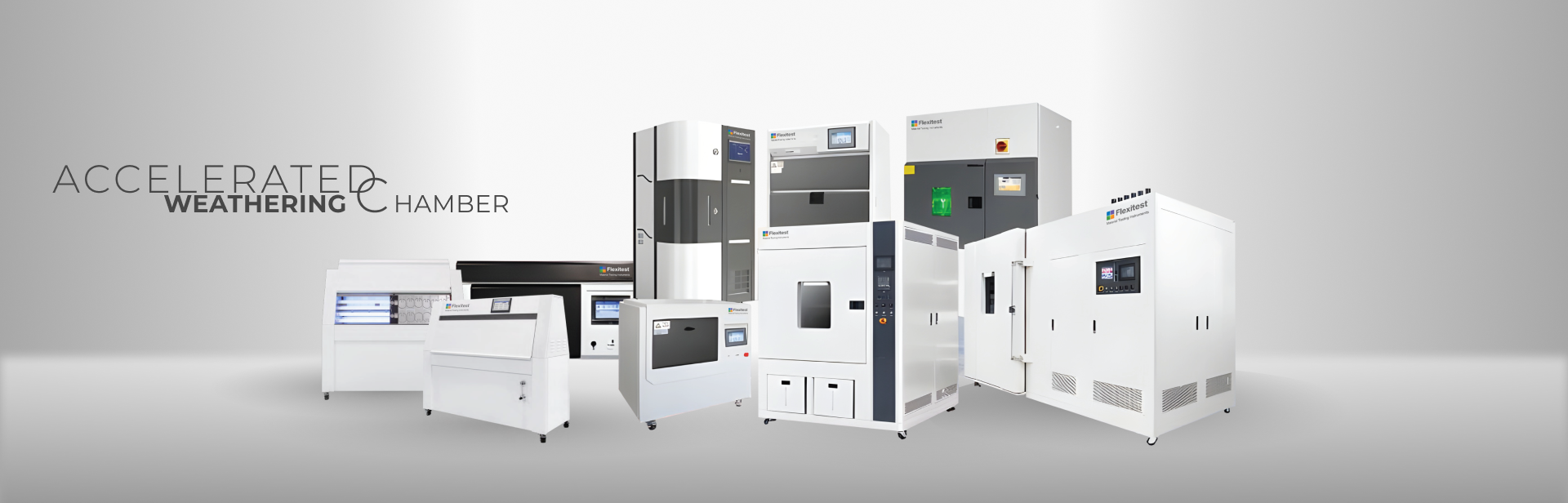
Accelerated weathering chambers for plastics and polymers, reproducing UV, heat and moisture exposure to predict colour, gloss and strength loss.
View Details →


