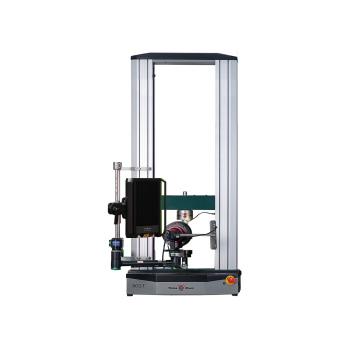

Universal Tensile Testing Machine Technical Textile
- Home
- Technical Textiles
- Textile UTM
Built to Test, Proven to Last the Ultimate Partner for Technical Textile Durability
Universal Testing Machine (UTM) in the technical textile world is like the ultimate test for fabric endurance. It’s not just about pulling fabrics apart—it’s about pushing them to their limits, ensuring they can handle extreme forces, stretching, tearing, and compression. From high-tension ropes used in aerospace to protective gear that shields lives, the UTM measures every inch of strength and flexibility needed for performance.
It’s the tool that tells you if a fabric can stand the pressure, adapt to bending, or stretch without breaking, which is critical for creating game-changing materials. Whether you’re crafting next-gen medical wear or high-durability automotive textiles, the UTM keeps your materials on point.
Key Considerations
Key Considerations for Selecting a UTM Across Industries
ASTM
Standards
ISO
Standards

Sample Dimensions

Service & Supports

Test Speed & Control

Capacity & Force Range

Grips & Fixtures

Standard Software
Universal Tensile Testing Machine Solutions
Technical Textile test standards compliance
Verified compliance across international standards
INTERNATIONAL STANDARDS (ISO / ASTM)
ISO 527-3 | ASTM D882
Tensile strength of battery separator films
ISO 8295 | ASTM D1894
Friction of separator films for winding quality control
ISO 8510-2 | ASTM D903
Peel adhesion of electrode coatings on current collectors
ISO 6892-1 | ASTM E8
Aluminium/copper foil and busbar tensile properties
ISO 527-1/2 | ASTM D638
Battery enclosure and housing polymer components
ISO 527-4 | ASTM D3039
Lightweight CFRP/GFRP structural body panels
ISO 604 | ASTM D695
Compressive strength of battery cell enclosures & spacers
Submit Your Details to Download Brochure!
FAQ's
Frequently Asked Questions (FAQs) – Universal Testing Machines
What is a Universal Tensile Testing Machine and which ASTM and ISO standards does it support?
A Universal Tensile Testing Machine (UTM) applies controlled tensile, compressive, bend, peel, and shear forces to evaluate mechanical properties of materials. Flexitest UTMs support a wide range of global standards including ASTM D638, ASTM D882, ASTM E8, ASTM D412, ASTM D5034, ASTM D828, ASTM F88, ISO 527, ISO 6892-1, ISO 37, ISO 13934, and ISO 1924 — covering plastics, metals, rubber, textiles, paper, and packaging materials.
How is a UTM used for tensile testing of plastics per ASTM D638 and ISO 527?
ASTM D638 is the standard test method for tensile properties of plastics, evaluating tensile strength, elongation at break, and tensile modulus using dumbbell-shaped specimens. ISO 527-2 covers the same fundamental measurements but uses different specimen geometry and test speed requirements. ASTM D638 is preferred in North American markets while ISO 527 is specified by European and international buyers. Both are performed on a Flexitest UTM with appropriate grips and extensometer. ASTM International
What is ASTM D882 and why is it important for packaging film testing on a UTM?
ASTM D882 is a standard test method for determining the tensile properties of thin plastic films with a thickness of less than 1.0 mm and is of great importance in the film packaging industry, both for quality control and research and development. It measures tensile strength, elongation at break, and tensile modulus of flexible packaging films including polyethylene, polypropylene, polyester, and laminate films. The ISO equivalent is ISO 527-3. A Flexitest UTM with film grips performs ASTM D882 testing accurately.
Which UTM standards apply to tensile testing of metals and metallic components?
ASTM E8 and ASTM E8M describe uniaxial tensile testing of metals at room temperature. ISO 6892-1 is the international standard for tensile testing of metallic materials, covering specimen geometry, grip configuration, and extensometer requirements. ASTM E8 is used by North American automotive and industrial buyers while ISO 6892-1 is the global standard. Both standards measure yield strength, tensile strength, elongation, and Young’s modulus. Flexitest UTM models from 10 kN to 300 kN are suitable for metallic specimen testing.
How is a UTM used for tensile testing of rubber and elastomers per ASTM D412 and ISO 37?
ASTM D412 and ISO 37 are both widely recognised tensile test methods for evaluating the stress-strain characteristics of rubber materials including natural rubber, synthetic rubber, silicone rubber, and thermoplastic elastomers (TPEs). Dumbbell-shaped specimens are stretched at a controlled speed until break. The test measures tensile strength, elongation at break, and elastic modulus. High-elongation extensometers capable of measuring 500% strain or more are required. Flexitest UTMs with rubber grips and appropriate load cells support both ASTM D412 and ISO 37 testing.
How is a UTM used for tensile testing of paper, board, and paper-based packaging?
Tensile testing of paper and paperboard is performed per ASTM D828 and ISO 1924 on a universal testing machine. These standards measure tensile breaking strength and stretch of paper, corrugated board, kraft paper, and paper-based packaging materials. Results determine the suitability of paper substrates for flexible packaging, labels, bags, and cartons. Paper testing standards for UTM include ASTM D828 and ISO 1924 Parts 1 and 2. A Flexitest UTM with flat-face grips and appropriate load cell performs these tests accurately.
Which standards govern tensile testing of technical textiles and nonwovens on a UTM?
ASTM D5034 and ISO 13934-2 describe the grab test procedure for determining breaking strength and elongation of woven, nonwoven, and felted textile fabrics. The method is particularly suitable for woven, nonwoven, and felted materials, providing practical values for evaluating mechanical strength of textiles. ASTM D5034 specifies a specimen width of 100 mm while ISO 13934-2 specifies 100 ±2 mm. Both tests are performed on a Flexitest UTM using textile grips with a constant crosshead speed.
What is ASTM F88 and how is it tested on a Universal Tensile Testing Machine?
ASTM F88 is the standard test method for seal strength of flexible barrier materials including heat-sealed pouches, medical device packaging, and flexible food packaging. A UTM applies a controlled peel force to separated seal edges at a defined angle — typically 90° or 180° — measuring the force required to peel the seal. ASTM F88 is used for direct heat seal strength testing of flexible barrier packaging materials. Results validate seal integrity, confirm heat sealer settings, and support ISO 11607 medical device packaging compliance.
How do I select the right UTM load capacity for my testing application?
Selecting the correct UTM load capacity depends on the material being tested. Packaging films, paper, and thin laminates require low-force models from 500 N to 1 kN (Flexitest C610H or 1ST) per ASTM D882 and ASTM F88. Plastics and rubber testing per ASTM D638 and ASTM D412 typically require 1 kN to 5 kN. Metal and composite testing per ASTM E8 and ISO 6892-1 requires 10 kN to 300 kN. Choosing an undersized load cell reduces accuracy while oversizing reduces sensitivity at low forces.
How should a Universal Tensile Testing Machine be calibrated to ensure accurate results?
UTMs must be calibrated per ISO 7500-1, which specifies verification of static uniaxial testing machines by classifying force measurement accuracy into Class 0.5, Class 1, and Class 2. Load cells must be verified using traceable calibrated weights or reference force transducers. Crosshead speed, extensometer accuracy, and alignment must also be verified. Calibration records must meet ISO 17025 laboratory competence requirements. Flexitest provides NABL-traceable UTM calibration services across all models and capacity ranges.