
Packaging - Universal Tensile Testing Machine

  1. Home
  2. Packaging Testing Equipments
  3. UTM – Packaging Industry
UTM Packaging main banner new 1536x493 1

Ensuring Strength, Reliability, and Durability in Every Package
with the Flexitest UTM.

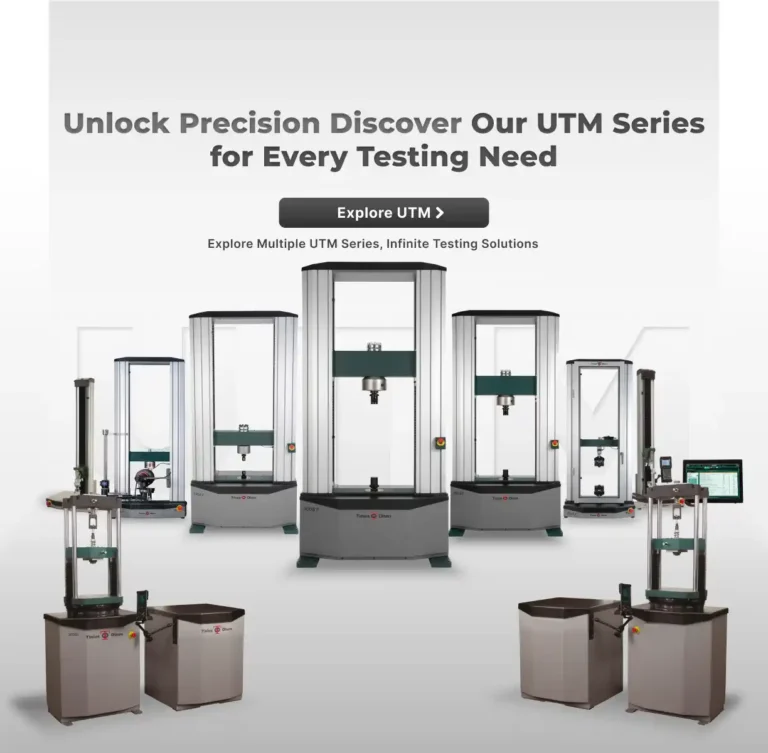
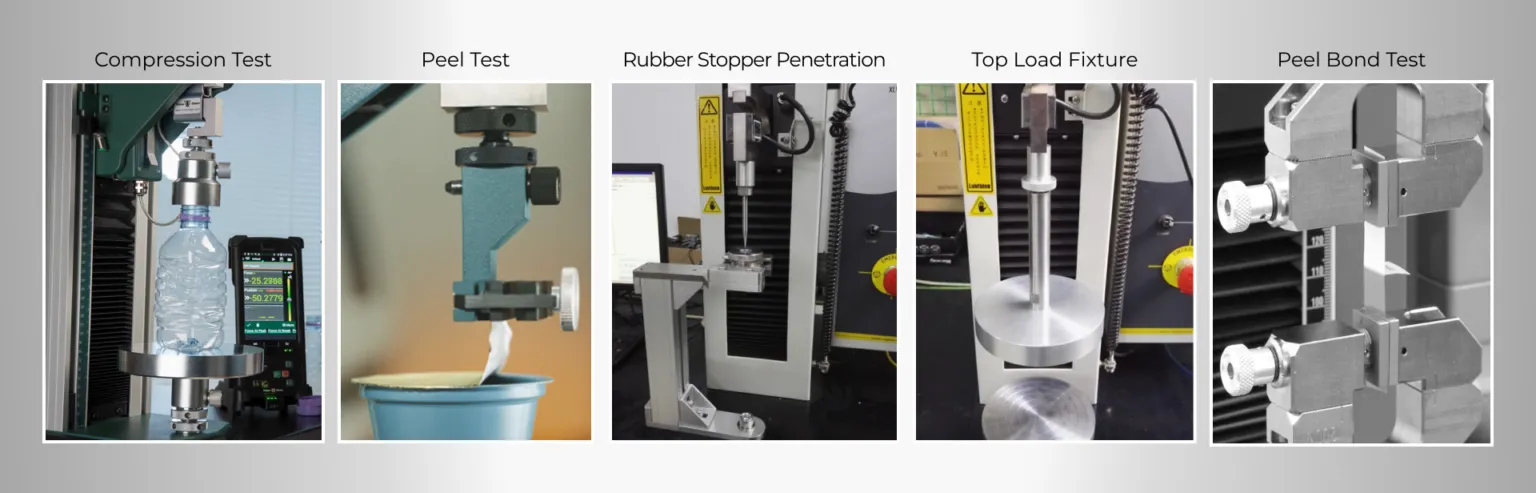
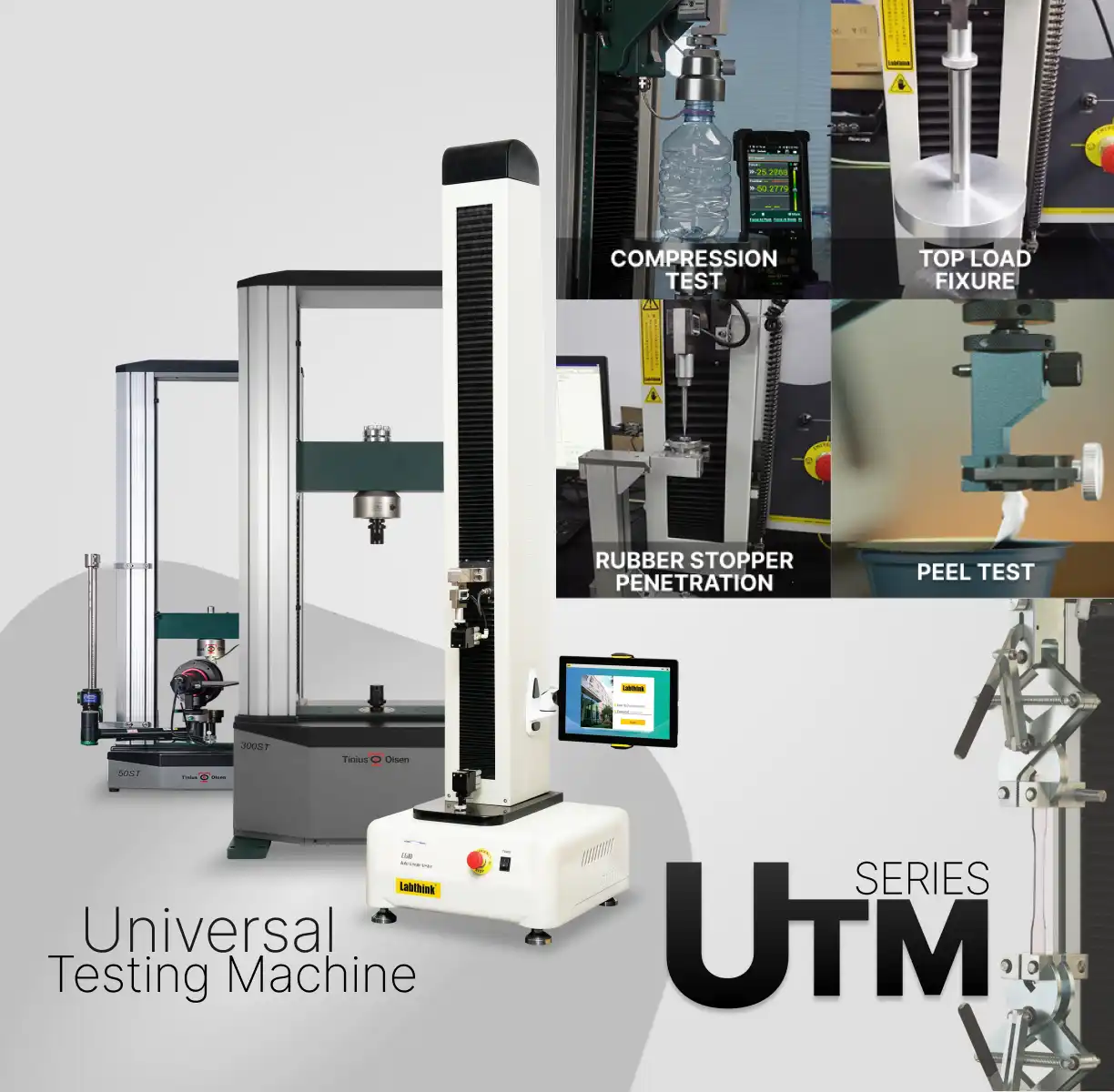
The UTM Universal testing Machine – Tensile machine – allows for a wide range of tests on both raw materials like Flexible packaging, plastic- polymers, Paper, as well as whole Packages. A comprehensive suite of tests are available, covering tensile, elongation, shear, compressive, flexural, puncture, burst strengths, tear, peel & bond resistances. Our machines cater to research and quality control departments, enabling the measurement of material strength and performance. All tests adhere to international standards such as ISO, ASTM, EN, and other industry-specific benchmarks, ensuring reliability and consistency in results.

Key Considerations

Key Considerations for Selecting a UTM Across Industries

UTM ASTM Standards

ASTM
Standards

UTM ISO Standards

ISO
Standards

UTM Sample Dimensions

Sample Dimensions

UTM Service & Supports

Service & Supports

UTM Test Speed & Control

Test Speed & Control

UTM Capacity & Force Range

Capacity & Force Range

UTM Grips & Fixtures

Grips & Fixtures

UTM Standard Software

Standard Software

Edit Template

Packaging test standards compliance

Verified compliance across international standards

INTERNATIONAL STANDARDS (ISO / ASTM)

UTM ISO Standards
UTM ASTM Standards

ISO 11607 | ASTM F88

Heat-sealed pouches, medical packaging, food sachets

ISO 527-3 | ASTM D882

Tensile strength & elongation of plastic films (<1mm)

ISO 8295 | ASTM D1894

Static & kinetic COF for packaging line runnability

ISO 8295 | ASTM F904

Ply adhesion of laminates (film, foil, paper)

ISO 1924 | ASTM D828

Tensile properties of paper & paperboard packaging

ISO 8510-2 | ASTM D903

180° peel strength of labels, tapes, and adhesives

ISO 12048 | ASTM D642

Compressive resistance of containers, caps, closures

Select the right UTM for your specific requirements

Not sure which model is right for your packaging application? Use this comparison to find the best fit for your materials and lab requirements.The right model depends on your packaging materials and the force levels involved. Here’s a quick guide.

Flexitest UTM Specifications
Spec / Unit 1ST 5ST 10ST 25ST 50ST 100ST 150ST 300ST 300SL
Model
CapacitykN15102550100150300300
lbf2001,0002,0005,00011,00020,00030,00060,00060,000
Test Speed
Range
mm/min0.001-10000.001-10000.001-10000.001-10000.001-5000.001-5000.001-5000.001-5000.001-76
in/min0.00004-400.00004-400.00004-400.00004-400.00004-200.00004-200.00004-200.00004-200.00004-3
Clearance
Between
Columns
mm--410410410656656656-
in--161616262626-
Throat
Depth
mm100100-------
in44-------
Max
Crosshead
Travel
mm755755109010901065119811731173648
in303043434247464625.5
Dimensions
(HxWxD)
mm1168×511×4671168×511×4671625×729×5061625×729×5061655×729×5062323×1205×7002323×1205×7002323×1205×700865×750×699
in46×20×1846×20×1864×29×2064×29×2065×29×2091×47×2891×47×2891×47×2834×29.5×27.5
Weightkg464613013016377895411251180
lb1011012872873591715210324802600

FAQ's

 Frequently Asked Questions (FAQs) – Universal Testing Machines

A Universal Tensile Testing Machine (UTM) applies controlled tensile, compressive, bend, peel, and shear forces to evaluate mechanical properties of materials. Flexitest UTMs support a wide range of global standards including ASTM D638, ASTM D882, ASTM E8, ASTM D412, ASTM D5034, ASTM D828, ASTM F88, ISO 527, ISO 6892-1, ISO 37, ISO 13934, and ISO 1924 — covering plastics, metals, rubber, textiles, paper, and packaging materials.

ASTM D638 is the standard test method for tensile properties of plastics, evaluating tensile strength, elongation at break, and tensile modulus using dumbbell-shaped specimens. ISO 527-2 covers the same fundamental measurements but uses different specimen geometry and test speed requirements. ASTM D638 is preferred in North American markets while ISO 527 is specified by European and international buyers. Both are performed on a Flexitest UTM with appropriate grips and extensometer. ASTM International

ASTM D882 is a standard test method for determining the tensile properties of thin plastic films with a thickness of less than 1.0 mm and is of great importance in the film packaging industry, both for quality control and research and development. It measures tensile strength, elongation at break, and tensile modulus of flexible packaging films including polyethylene, polypropylene, polyester, and laminate films. The ISO equivalent is ISO 527-3. A Flexitest UTM with film grips performs ASTM D882 testing accurately.

ASTM E8 and ASTM E8M describe uniaxial tensile testing of metals at room temperature. ISO 6892-1 is the international standard for tensile testing of metallic materials, covering specimen geometry, grip configuration, and extensometer requirements. ASTM E8 is used by North American automotive and industrial buyers while ISO 6892-1 is the global standard. Both standards measure yield strength, tensile strength, elongation, and Young’s modulus. Flexitest UTM models from 10 kN to 300 kN are suitable for metallic specimen testing.

ASTM D412 and ISO 37 are both widely recognised tensile test methods for evaluating the stress-strain characteristics of rubber materials including natural rubber, synthetic rubber, silicone rubber, and thermoplastic elastomers (TPEs). Dumbbell-shaped specimens are stretched at a controlled speed until break. The test measures tensile strength, elongation at break, and elastic modulus. High-elongation extensometers capable of measuring 500% strain or more are required. Flexitest UTMs with rubber grips and appropriate load cells support both ASTM D412 and ISO 37 testing.

Tensile testing of paper and paperboard is performed per ASTM D828 and ISO 1924 on a universal testing machine. These standards measure tensile breaking strength and stretch of paper, corrugated board, kraft paper, and paper-based packaging materials. Results determine the suitability of paper substrates for flexible packaging, labels, bags, and cartons. Paper testing standards for UTM include ASTM D828 and ISO 1924 Parts 1 and 2. A Flexitest UTM with flat-face grips and appropriate load cell performs these tests accurately.

ASTM D5034 and ISO 13934-2 describe the grab test procedure for determining breaking strength and elongation of woven, nonwoven, and felted textile fabrics. The method is particularly suitable for woven, nonwoven, and felted materials, providing practical values for evaluating mechanical strength of textiles. ASTM D5034 specifies a specimen width of 100 mm while ISO 13934-2 specifies 100 ±2 mm. Both tests are performed on a Flexitest UTM using textile grips with a constant crosshead speed.

ASTM F88 is the standard test method for seal strength of flexible barrier materials including heat-sealed pouches, medical device packaging, and flexible food packaging. A UTM applies a controlled peel force to separated seal edges at a defined angle — typically 90° or 180° — measuring the force required to peel the seal. ASTM F88 is used for direct heat seal strength testing of flexible barrier packaging materials. Results validate seal integrity, confirm heat sealer settings, and support ISO 11607 medical device packaging compliance.

Selecting the correct UTM load capacity depends on the material being tested. Packaging films, paper, and thin laminates require low-force models from 500 N to 1 kN (Flexitest C610H or 1ST) per ASTM D882 and ASTM F88. Plastics and rubber testing per ASTM D638 and ASTM D412 typically require 1 kN to 5 kN. Metal and composite testing per ASTM E8 and ISO 6892-1 requires 10 kN to 300 kN. Choosing an undersized load cell reduces accuracy while oversizing reduces sensitivity at low forces.

UTMs must be calibrated per ISO 7500-1, which specifies verification of static uniaxial testing machines by classifying force measurement accuracy into Class 0.5, Class 1, and Class 2. Load cells must be verified using traceable calibrated weights or reference force transducers. Crosshead speed, extensometer accuracy, and alignment must also be verified. Calibration records must meet ISO 17025 laboratory competence requirements. Flexitest provides NABL-traceable UTM calibration services across all models and capacity ranges.

Edit Template
Scroll to Top