Flexitest Colour measurement solutions

  1. Home
  2. Paint /Coating/ Metals
  3. Flexitest Colour measurement solutions – Paints
Color That Defines Quality in Every Polymer

Flexitest offers advanced color measurement solutions tailored for the paint, coating, and metal industries. Our spectrophotometers and colorimeters provide precise data on hue, saturation, and brightness, ensuring consistency in coatings and finishes. Whether you’re working with industrial coatings, automotive paints, or protective metal finishes, our instruments help achieve accurate color matching and uniform application. With real-time data insights, manufacturers can maintain quality standards, reduce rework, and enhance product appeal. Flexitest’s reliable measurement tools support efficient production, regulatory compliance, and long-term durability in coatings and metal treatments. Ensure precision in every layer with Flexitest’s trusted color measurement solutions.

Colour Measurement Instrument Comparison

← Swipe to see all models →
Colour measurement instrument specifications
Specification TS7700Grating Spectrophotometer YH1000Haze Meter YS6060Benchtop Spectrophotometer TS8500Benchtop Spectrophotometer
Model TS7700 YH1000 YS6060 TS8500
Optical geometry Reflectance d/8 (diffuse illumination, 8° viewing); SCI/SCE; UV included/excluded. Transmittance 0/D (parallel illumination, diffuse viewing). Reflectance d/8 and transmittance d/0; SCI/SCE; UV included/excluded; haze to ASTM D1003. Reflectance d/8 and transmittance d/0; SCI/SCE simultaneous; UV included/excluded; haze (ASTM D1003); 8° gloss.
Colour space CIE L*a*b*, XYZ, Yxy, LCh, CIE L*u*v*, sRGB, Hunter Lab, βxy, DIN Lab 99 and Munsell (C/2). Not applicable (haze and transmittance measurement). CIE L*a*b*, XYZ, Yxy, LCh, CIE L*u*v*, Munsell, sRGB, Hunter Lab, βxy and DIN Lab 99. CIE L*a*b*, XYZ, Yxy, LCh, CIE L*u*v*, Munsell, sRGB, Hunter Lab, βxy, DIN Lab 99; plus APHA/Hazen/Pt-Co, Gardner Index, Saybolt, ASTM D1500.
Illuminants D65, A, C, D50, D55, D75, F1, F2 (CWF), F3–F12, DLF, TPL5, TL84 and TL83/U30. D65, A and C. D65, A, C, D50, D55, D75, F1–F12, CWF, DLF, TL83, TL84, TPL5 and U30. D65, A, C, D50, D55, D75, F1–F12, CWF, DLF, TL83, TL84, TPL5, U30, LED-B1–B5, LED-BH1, LED-RGB1, LED-V1/V2, LED-C2/C3/C5 and customised (41 total).
Wavelength range 400–700 nm Not applicable 360–780 nm 360–780 nm
Data storage 1,000 standards; 30,000 samples 1,000 standards; 10,000 samples 5,000 standards; 40,000 samples 64 GB storage; 100,000+ records
Observer angle 2° / 10° 2° / 10° 2° / 10°
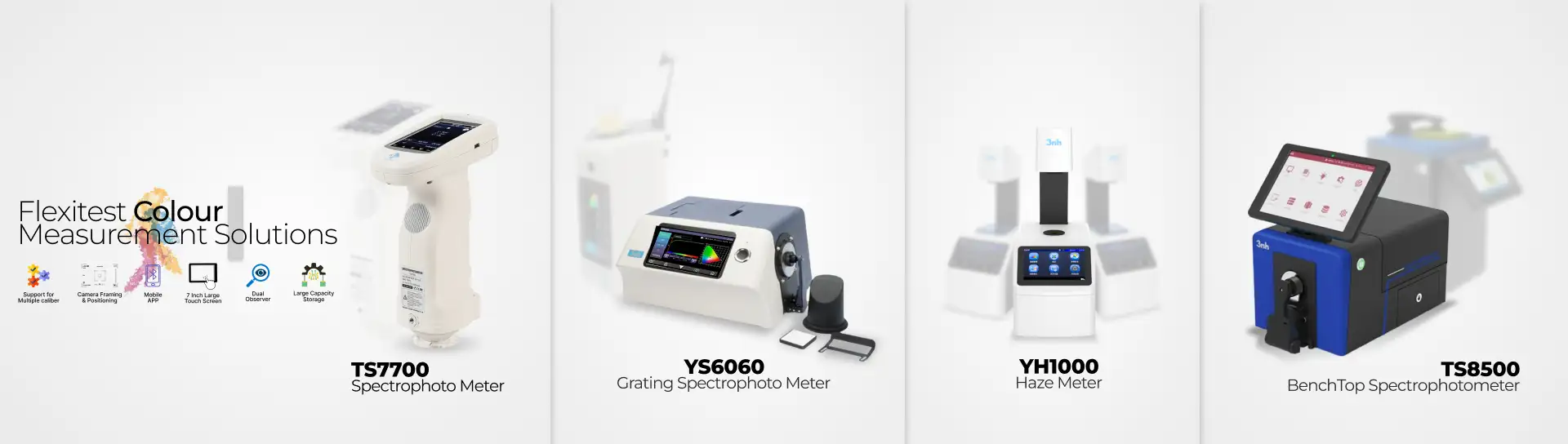
TS7700
Grating Spectrophotometer
ModelTS7700
Optical geometryReflectance d/8; SCI/SCE; UV included/excluded.
Colour spaceCIE L*a*b*, XYZ, Yxy, LCh, L*u*v*, sRGB, Hunter Lab, βxy, DIN Lab 99, Munsell (C/2).
IlluminantsD65, A, C, D50, D55, D75, F1–F12, DLF, TPL5, TL84, TL83/U30.
Wavelength range400–700 nm
Data storage1,000 standards; 30,000 samples
Observer angle2° / 10°
YH1000
Haze Meter
ModelYH1000
Optical geometryTransmittance 0/D (parallel illumination, diffuse viewing).
Colour spaceNot applicable (haze and transmittance measurement).
IlluminantsD65, A and C.
Wavelength rangeNot applicable
Data storage1,000 standards; 10,000 samples
Observer angle
YS6060
Benchtop Spectrophotometer
ModelYS6060
Optical geometryReflectance d/8 and transmittance d/0; SCI/SCE; UV included/excluded; haze to ASTM D1003.
Colour spaceCIE L*a*b*, XYZ, Yxy, LCh, L*u*v*, Munsell, sRGB, Hunter Lab, βxy, DIN Lab 99.
IlluminantsD65, A, C, D50, D55, D75, F1–F12, CWF, DLF, TL83, TL84, TPL5, U30.
Wavelength range360–780 nm
Data storage5,000 standards; 40,000 samples
Observer angle2° / 10°
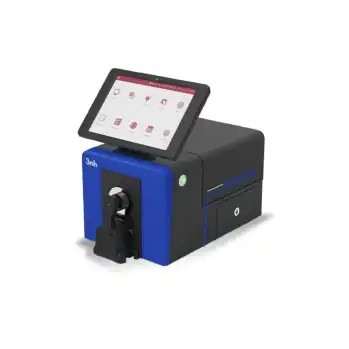
TS8500
Benchtop Spectrophotometer
ModelTS8500
Optical geometryReflectance d/8 and transmittance d/0; SCI/SCE simultaneous; UV included/excluded; haze (ASTM D1003); 8° gloss.
Colour spaceCIE L*a*b*, XYZ, Yxy, LCh, L*u*v*, Munsell, sRGB, Hunter Lab, βxy, DIN Lab 99; plus APHA/Hazen/Pt-Co, Gardner Index, Saybolt, ASTM D1500.
Illuminants41 illuminants — D65, A, C, D50–D75, F1–F12, CWF, DLF, TL83, TL84, TPL5, U30, LED-B1–B5, LED-BH1, LED-RGB1, LED-V1/V2, LED-C2/C3/C5 and customised.
Wavelength range360–780 nm
Data storage64 GB storage; 100,000+ records
Observer angle2° / 10°

This overview reproduces the comparison specifications used on this page. Consult the linked product page before final instrument selection.

FAQ's

 Frequently Asked Questions (FAQs) –Flexitest Colour measurement solutions
{ "@context": "https://schema.org", "@type": "FAQPage", "mainEntity": [ { "@type": "Question", "name": "Which instrument is best for colour measurement of paints and coatings?", "acceptedAnswer": { "@type": "Answer", "text": "For opaque painted or powder-coated surfaces, the TS7700 is the portable choice for on-site reflectance colour checks, while the YS6060 suits a laboratory that also needs transmittance measurement. The TS8500 is the most comprehensive benchtop option, adding simultaneous SCI and SCE measurement, 41 illuminants, and 8° gloss — useful when the coating specification requires multiple measurement modes in a single pass. The YH1000 is not intended for opaque paint colour measurement; it is designed for haze and transmittance on transparent or translucent materials." } }, { "@type": "Question", "name": "What is the difference between the TS7700 and the YS6060?", "acceptedAnswer": { "@type": "Answer", "text": "The TS7700 is a portable d/8 reflectance spectrophotometer covering 400–700 nm. It measures SCI and SCE and supports up to 30,000 sample records. The YS6060 is a benchtop instrument covering 360–780 nm with both d/8 reflectance and d/0 transmittance geometry, haze measurement to ASTM D1003, and storage for up to 40,000 samples. Choose the TS7700 for portability and on-line QC; choose the YS6060 when laboratory reflectance, transmittance and haze are all required." } }, { "@type": "Question", "name": "What makes the TS8500 different from the YS6060?", "acceptedAnswer": { "@type": "Answer", "text": "Both cover 360–780 nm with d/8 reflectance and d/0 transmittance geometry, but the TS8500 measures SCI and SCE simultaneously in a single scan rather than sequentially. It also supports 41 illuminants including LED variants, stores 100,000+ records on 64 GB internal storage, and adds APHA/Hazen/Pt-Co, Gardner Index, Saybolt and ASTM D1500 colour indices — measurements relevant to varnish, lacquer and liquid coating QC. The TS8500 also includes 8° gloss measurement and a 10.5-inch rotating display." } }, { "@type": "Question", "name": "When should the YH1000 haze meter be used in paint and coating QC?", "acceptedAnswer": { "@type": "Answer", "text": "Use the YH1000 when the requirement is haze or total luminous transmittance — for example, on clear lacquers, protective coatings on glass, transparent films or coated screens. It uses 0/D transmittance geometry and D65, A and C illuminants. It is not a substitute for a spectrophotometer when colour difference or colour matching on opaque painted surfaces is required." } }, { "@type": "Question", "name": "What do SCI and SCE mean, and why does it matter for coatings?", "acceptedAnswer": { "@type": "Answer", "text": "SCI (Specular Component Included) captures both diffuse and specular reflected light, giving a reading closer to the intrinsic pigment colour and less affected by surface texture or gloss level. SCE (Specular Component Excluded) removes the specular reflection, making the result more representative of how the coating looks visually under typical viewing conditions. For gloss coatings, SCE is often the preferred mode for colour difference assessment. The TS7700, YS6060 and TS8500 all support SCI and SCE; the TS8500 measures both simultaneously." } }, { "@type": "Question", "name": "Which observer angles and illuminants are available across these instruments?", "acceptedAnswer": { "@type": "Answer", "text": "The TS7700 and YS6060 support the 2° and 10° standard observers with a broad range of illuminants including D65, A, C, D50, D55, D75, F1–F12, DLF, TPL5, TL84 and TL83/U30. The YH1000 uses a 2° observer with D65, A and C illuminants only. The TS8500 supports both observers and 41 illuminants, adding LED-B1–B5, LED-BH1, LED-RGB1, LED-V1/V2 and LED-C2/C3/C5, along with customised illuminant entry — important when matching under LED booth or production lighting." } }, { "@type": "Question", "name": "How much data can each instrument store?", "acceptedAnswer": { "@type": "Answer", "text": "The TS7700 stores up to 1,000 standards and 30,000 sample records. The YH1000 stores 1,000 standards and 10,000 samples. The YS6060 stores 5,000 standards and 40,000 samples. The TS8500 provides 64 GB internal storage with capacity for 100,000+ records — suited to high-volume production lines or laboratories managing large colour libraries." } }, { "@type": "Question", "name": "Which wavelength range is needed for paint and coating colour measurement?", "acceptedAnswer": { "@type": "Answer", "text": "The TS7700 covers 400–700 nm, which is sufficient for most visible-colour QC on paints and solid-colour coatings. The YS6060 and TS8500 cover 360–780 nm, extending into the near-UV and near-infrared. The wider range is useful when the coating specification references fluorescence, optical brighteners, or colour indices that require data outside the 400–700 nm window." } }, { "@type": "Question", "name": "Which ASTM and ISO standards apply to paint and coating colour measurement?", "acceptedAnswer": { "@type": "Answer", "text": "Common references include ASTM E1164 for spectral data collection, ASTM E308 for calculating CIE tristimulus values, and ASTM D2244 for colour-difference calculation on opaque coatings. ISO 18314-1 covers practical colour measurement of uniform paint films. ASTM E1331 applies to sphere-based reflectance measurement. For powder coatings, ASTM D5382 covers colour, colour difference, gloss and metamerism QC. Metallic-flake finishes require multi-angle measurement under ASTM E2194, and pearlescent or interference-effect coatings may require ASTM E2539. Always confirm the illuminant, observer, geometry and tolerance specified in your customer's coating standard." } }, { "@type": "Question", "name": "How do I choose between the TS7700, YH1000, YS6060 and TS8500 for my application?", "acceptedAnswer": { "@type": "Answer", "text": "Start with the sample and the measurement requirement. For portable reflectance colour checks on opaque painted or coated parts at goods-in or on the production line, choose the TS7700. For haze and transmittance on clear lacquers, protective films or coated glass, choose the YH1000. For a laboratory benchtop that measures both reflectance and transmittance with haze, choose the YS6060. For the highest-specification laboratory requirement — simultaneous SCI/SCE, 41 illuminants including LED sources, APHA/Hazen/Gardner liquid colour indices, 8° gloss and large data storage — choose the TS8500. Share your substrate, finish type, measurement standard and acceptance tolerance with the Flexitest team for a confirmed recommendation." } } ] }
Which instrument is best for colour measurement of paints and coatings?
For opaque painted or powder-coated surfaces, the TS7700 is the portable choice for on-site reflectance colour checks, while the YS6060 suits a laboratory that also needs transmittance measurement. The TS8500 is the most comprehensive benchtop option, adding simultaneous SCI and SCE measurement, 41 illuminants, and 8° gloss — useful when the coating specification requires multiple measurement modes in a single pass. The YH1000 is not intended for opaque paint colour measurement; it is designed for haze and transmittance on transparent or translucent materials.
What is the difference between the TS7700 and the YS6060?
The TS7700 is a portable d/8 reflectance spectrophotometer covering 400–700 nm. It measures SCI and SCE and supports up to 30,000 sample records. The YS6060 is a benchtop instrument covering 360–780 nm with both d/8 reflectance and d/0 transmittance geometry, haze measurement to ASTM D1003, and storage for up to 40,000 samples. Choose the TS7700 for portability and on-line QC; choose the YS6060 when laboratory reflectance, transmittance and haze are all required.
What makes the TS8500 different from the YS6060?
Both cover 360-780 nm with d/8 reflectance and d/0 transmittance geometry, but the TS8500 measures SCI and SCE simultaneously in a single scan rather than sequentially. It also supports 41 illuminants including LED variants, stores 100,000+ records on 64 GB internal storage, and adds APHA/Hazen/Pt-Co, Gardner Index, Saybolt and ASTM D1500 colour indices – measurements relevant to varnish, lacquer and liquid coating QC. The TS8500 also includes 8° gloss measurement and a 10.5-inch rotating display.
When should the YH1000 haze meter be used in paint and coating QC?
Use the YH1000 when the requirement is haze or total luminous transmittance – for example, on clear lacquers, protective coatings on glass, transparent films or coated screens. It uses 0/D transmittance geometry and D65, A and C illuminants. It is not a substitute for a spectrophotometer when colour difference or colour matching on opaque painted surfaces is required.
What do SCI and SCE mean, and why does it matter for coatings?
SCI (Specular Component Included) captures both diffuse and specular reflected light, giving a reading closer to the intrinsic pigment colour and less affected by surface texture or gloss level. SCE (Specular Component Excluded) removes the specular reflection, making the result more representative of how the coating looks visually under typical viewing conditions. For gloss coatings, SCE is often the preferred mode for colour difference assessment. The TS7700, YS6060 and TS8500 all support SCI and SCE; the TS8500 measures both simultaneously.
Which observer angles and illuminants are available across these instruments?
The TS7700 and YS6060 support the 2° and 10° standard observers with a broad range of illuminants including D65, A, C, D50, D55, D75, F1–F12, DLF, TPL5, TL84 and TL83/U30. The YH1000 uses a 2° observer with D65, A and C illuminants only. The TS8500 supports both observers and 41 illuminants, adding LED-B1–B5, LED-BH1, LED-RGB1, LED-V1/V2 and LED-C2/C3/C5, along with customised illuminant entry – important when matching under LED booth or production lighting.
Which wavelength range is needed for paint and coating colour measurement?
The TS7700 covers 400–700 nm, which is sufficient for most visible-colour QC on paints and solid-colour coatings. The YS6060 and TS8500 cover 360–780 nm, extending into the near-UV and near-infrared. The wider range is useful when the coating specification references fluorescence, optical brighteners, or colour indices that require data outside the 400–700 nm window.
Which ASTM and ISO standards apply to paint and coating colour measurement?

Common references include ASTM E1164 for spectral data collection, ASTM E308 for calculating CIE tristimulus values, and ASTM D2244 for colour-difference calculation on opaque coatings. ISO 18314-1 covers practical colour measurement of uniform paint films. ASTM E1331 applies to sphere-based reflectance measurement. For powder coatings, ASTM D5382 covers colour, colour difference, gloss and metamerism QC. Metallic-flake finishes require multi-angle measurement under ASTM E2194, and pearlescent or interference-effect coatings may require ASTM E2539 – a standard d/8 instrument is not a substitute for these effect finishes. Always confirm the illuminant, observer, geometry and tolerance specified in your customer’s coating standard.

How do I choose between the TS7700, YH1000, YS6060 and TS8500 for my application?

Start with the sample and the measurement requirement. For portable reflectance colour checks on opaque painted or coated parts at goods-in or on the production line, choose the TS7700. For haze and transmittance on clear lacquers, protective films or coated glass, choose the YH1000. For a laboratory benchtop that measures both reflectance and transmittance with haze, choose the YS6060. For the highest-specification laboratory requirement — simultaneous SCI/SCE, 41 illuminants including LED sources, APHA/Hazen/Gardner liquid colour indices, 8° gloss and large data storage — choose the TS8500. Share your substrate, finish type, measurement standard and acceptance tolerance with the Flexitest team for a confirmed recommendation.

×

Highlights

Scroll to Top

Request a Colour Measurement Recommendation

Tell us about your sample and measurement requirement. Our team will recommend the suitable TS7700, YH1000 or YS6060 configuration.