
Testing Instruments for Auto Ancilary Products
- Home
- Automotive
- Testing Instruments for Auto Ancilary Products

Testing Excellence and Reliability on Every Mile
Auto ancillary testing is essential in the automotive industry to ensure the reliability, safety, and performance of various automotive components and systems. This type of testing evaluates the quality of parts supplied by ancillary units, which include manufacturers of tires, batteries, brake systems, electronic components, and more. Through rigorous testing, these components are validated for their durability, functionality, and compliance with industry standards, ultimately contributing to the overall quality of the final vehicle.
Testing Instruments for Auto Ancilary Products Solutions


FAQ's
What are auto ancillary products and why do they need testing?
Auto ancillary products are parts and materials supplied to vehicle manufacturers by Tier 1, Tier 2 and Tier 3 suppliers, such as interior trim, seals, coatings, films, electronic components, tyres, batteries and brake parts. Testing confirms that these parts are durable, work as intended and meet OEM and industry requirements before they are supplied, which reduces rejections, warranty claims and recalls.
Which testing instruments does Flexitest offer for auto ancillary products?
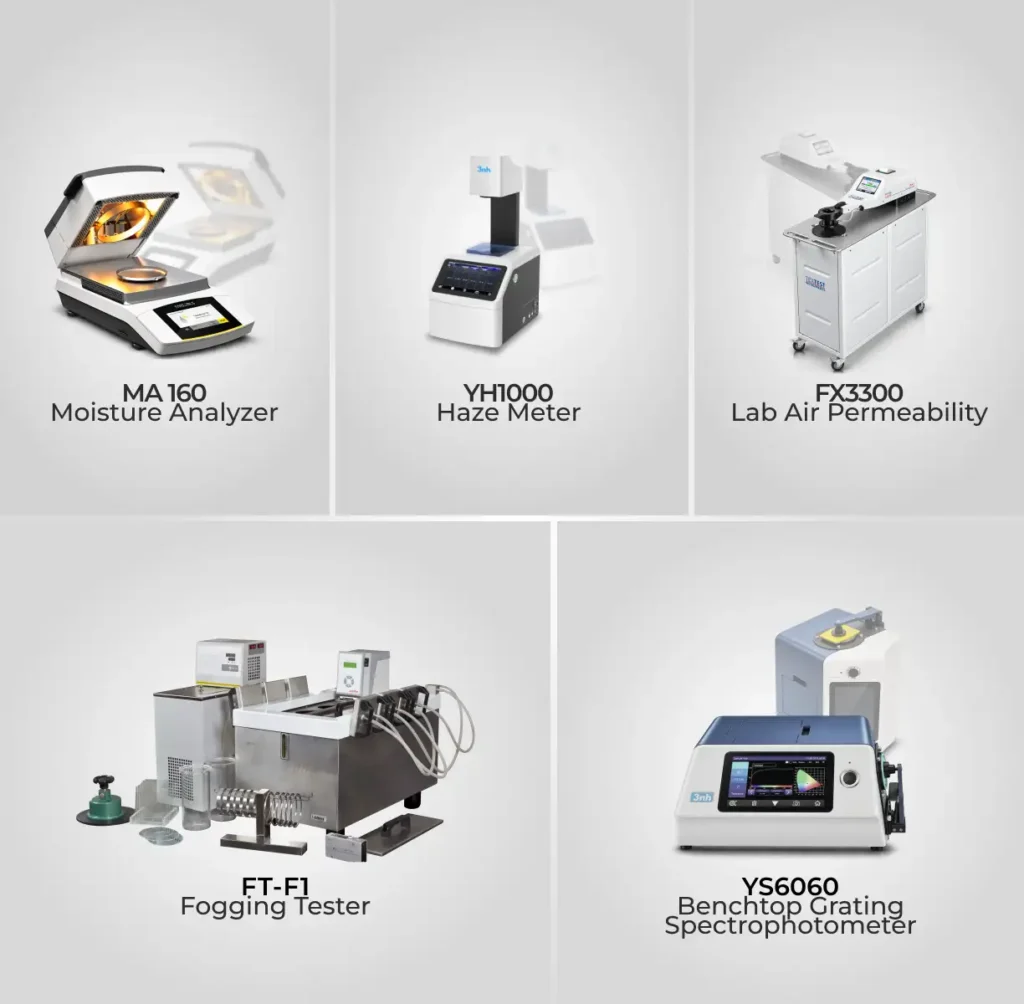
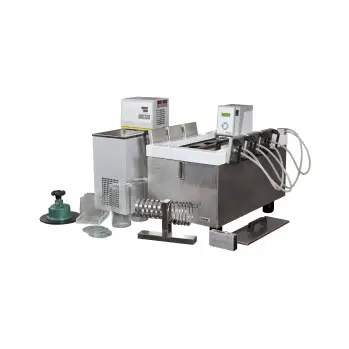
This page features the FX 3300 Lab Air Permeability Tester, the MA 160 Moisture Analyzer, the YS6060 Benchtop Grating Spectrophotometer, the YH1000 Haze Meter and the FT-F1 Fogging Tester. Flexitest also supplies related automotive equipment such as universal testing machines, climate chambers, xenon weathering chambers, salt spray chambers, vibration test systems, drying and heating chambers and thermal shock chambers.
What is fogging and how does the FT-F1 Fogging Tester help?
Fogging happens when volatile compounds evaporate from interior materials such as dashboards, trim, foams, leather and adhesives when the cabin heats up, and then condense as a hazy film on the windscreen and other cool surfaces. This reduces visibility and driver safety. The FT-F1 Fogging Tester heats a material sample and measures how much condensate it releases, so suppliers can check interior materials against OEM limits before supply.
Why is moisture content important for automotive plastics and materials, and what does the MA 160 Moisture Analyzer do?
Residual moisture in plastic granules, rubber compounds, powders and other raw materials can cause defects such as bubbles, splay marks, weak spots and dimensional changes in moulded or processed parts. The MA 160 gives a quick moisture-content reading by heating a small sample and weighing it as it dries – much faster than a conventional oven method – and helps you decide whether a material is ready to process.
How is a spectrophotometer used for paints, coatings and colour matching in automotive parts?
Automotive parts such as bumpers, trims, panels and interior components must match the colour specified by the OEM, batch after batch. The YS6060 measures colour numerically (for example in CIELAB values) rather than by eye, so you can compare a production sample with a master standard, calculate colour difference and keep records for quality control. The same approach is used when checking colour change after weathering or heat ageing.
What does the YH1000 Haze Meter measure, and where is it used?
A haze meter measures how much light is scattered by a transparent or translucent material, which shows up as cloudiness. In automotive applications, it is used to check transparent plastics, films, glazing and protective coatings such as lamp lenses, display covers, instrument cluster windows and window films. Haze is commonly assessed alongside light transmittance.
What is air permeability testing and does it apply to auto ancillary products?
Air permeability testing measures how easily air passes through a porous material. The FX 3300 Lab Air Permeability Tester is used for materials such as technical textiles, nonwovens and filter media. In the automotive field, this is relevant to products like seat fabrics, airbag fabrics, cabin and engine filter media, acoustic insulation and breathable membranes.
Which standards do these instruments follow?
Automotive tests are normally specified by the OEM or customer, who names the method, sample size and pass/fail limit, and these commonly refer to international standards such as ISO, ASTM, DIN or IS methods. Each instrument has to be matched to the method you are required to follow. Send Flexitest your test standard or OEM specification, and we will confirm which model and accessories comply before you place an order.
How do I choose the right instrument for my auto component or material?
Start with what you need to prove: interior emissions and fogging, raw material dryness, colour consistency, transparency, or breathability. Then note the material, sample size, the test method your customer specifies and how many samples you test per day. Share these details with Flexitest and we will recommend an instrument, and suggest complementary equipment if you also need mechanical, weathering, corrosion, vibration or thermal testing.