
Colour Measurement Instruments for Plastics and Polymers
- Home
- Plastic and Polymer
- Colour Measurement Instruments for Plastics and Polymers
Plastic and Polymer Colour Quality Control
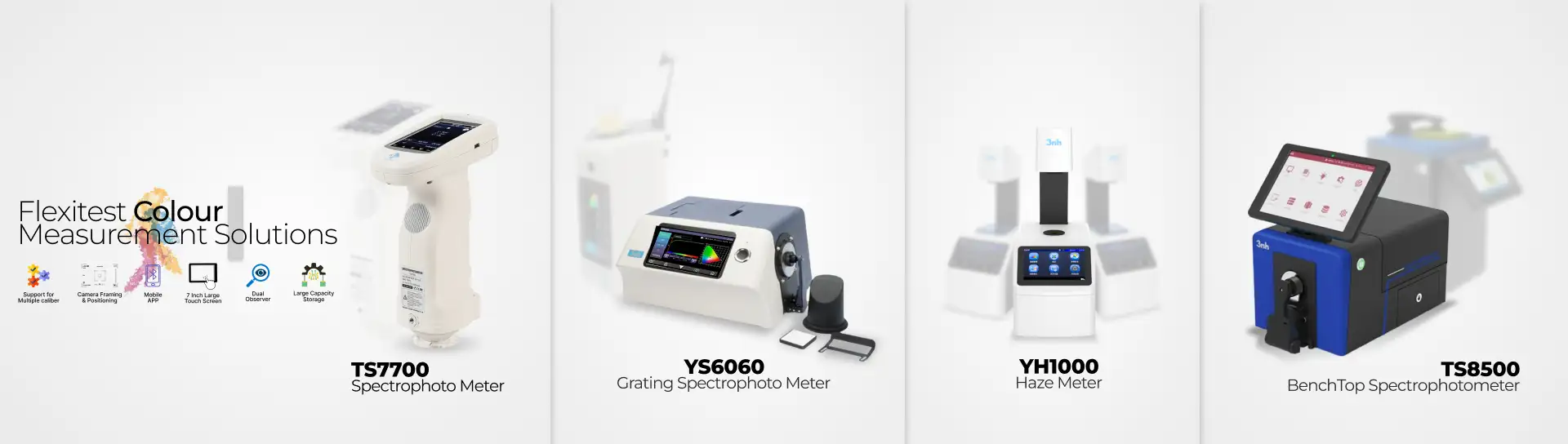
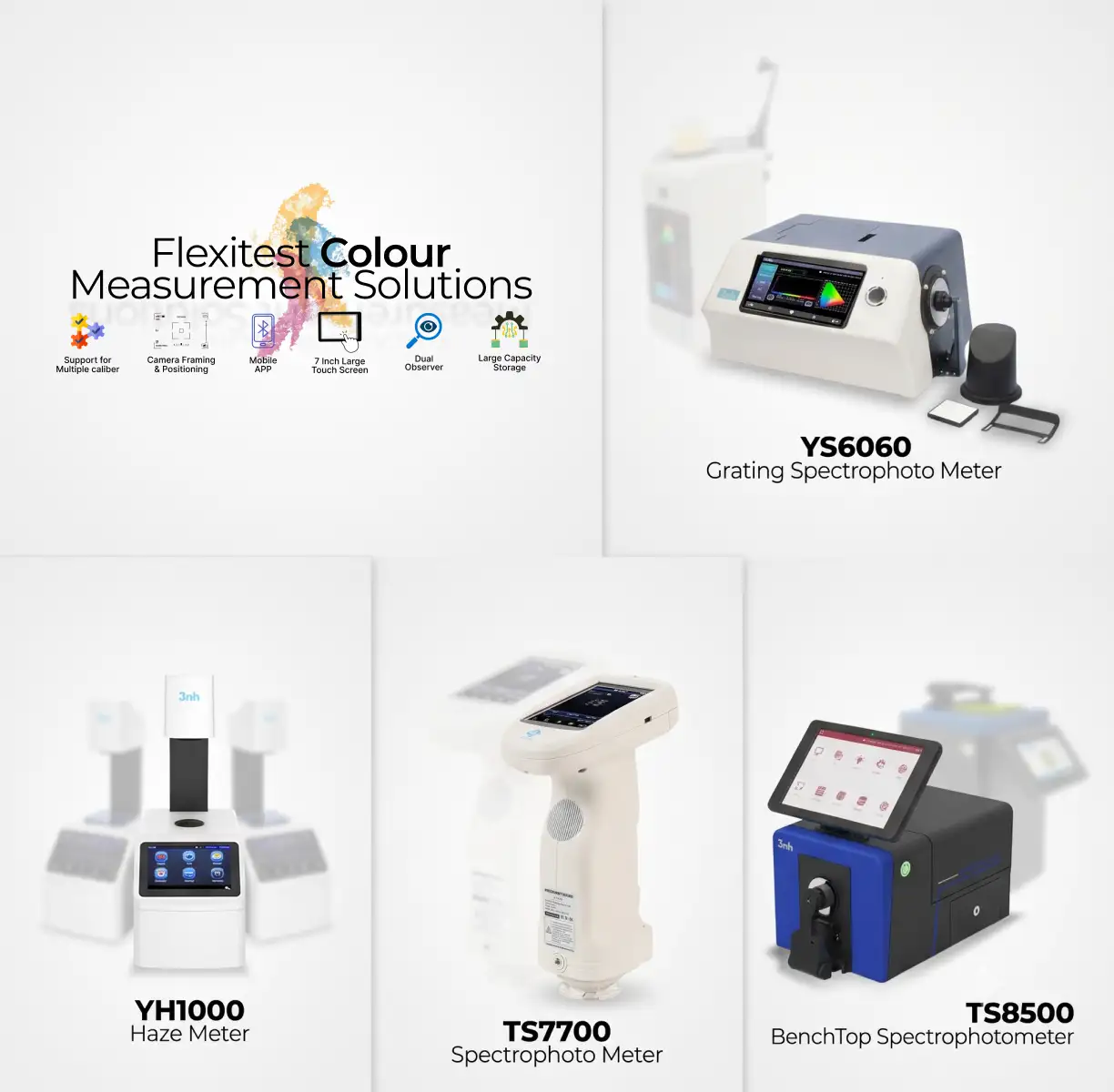
Colour variation, haze and light transmission can affect the appearance, consistency and acceptance of plastic products. Flexitest instruments support production and laboratory checks on moulded parts, masterbatch plaques, films, sheets, profiles, transparent panels and suitably presented liquid or powder samples.
Use the TS7700 for portable reflected-colour checks on opaque surfaces, the YH1000 for haze and luminous transmittance in transparent or translucent plastics, and the YS6060 for benchtop reflected and transmitted colour measurement. Final configuration depends on sample form, size, opacity, finish and the required test method.
Flexitest Colour measurement solutions


Colour Measurement Instrument Comparison
Compare instruments for reflected colour, transmitted colour, haze and luminous transmittance in plastic and polymer quality control. Choose TS7700 for portable reflected-colour checks, YH1000 for haze and transmittance, or YS6060 for benchtop reflectance and transmission colour measurement.
| Comparison | TS7700 Portable Spectrophotometer | YH1000 Haze Meter | YS6060 Benchtop Spectrophotometer | TS8500 Desktop Spectrophotometer |
|---|---|---|---|---|
| Best suited for | Portable reflected-colour and colour-difference quality control on opaque plastic and polymer surfaces. | Haze and luminous transmittance measurement on transparent or translucent plastics. | Laboratory reflected and transmitted colour measurement across opaque, translucent and transparent samples. | Benchtop colour measurement of solid, powder, paste, granule and liquid plastic samples — with APHA/Hazen/Gardner indices for chemical and polymer QC. |
| Optical geometry | Reflectance d/8; SCI/SCE; UV included/excluded. | Transmittance 0/D (parallel illumination, diffuse viewing). | Reflectance d/8 and transmittance d/0; SCI/SCE; UV included/excluded; haze to ASTM D1003. | Reflectance d/8 and transmittance d/0; SCI/SCE simultaneous; UV included/excluded; haze (ASTM D1003); 8° gloss. |
| Colour space | CIE L*a*b*, XYZ, Yxy, LCh, CIE L*u*v*, sRGB, Hunter Lab, βxy, DIN Lab 99 and Munsell (C/2). | Not applicable (haze and luminous transmittance measurement). | CIE L*a*b*, XYZ, Yxy, LCh, CIE L*u*v*, Munsell, sRGB, Hunter Lab, βxy and DIN Lab 99. | CIE L*a*b*, XYZ, Yxy, LCh, CIE L*u*v*, Munsell, sRGB, Hunter Lab, βxy and DIN Lab 99; plus APHA/Hazen/Pt-Co, Gardner Index, Saybolt, ASTM D1500. |
| Illuminants | D65, A, C, D50, D55, D75, F1–F12, DLF, TPL5, TL84 and TL83/U30. | D65, A and C. | D65, A, C, D50, D55, D75, F1–F12, CWF, DLF, TL83, TL84, TPL5 and U30. | D65, A, C, D50, D55, D75, F1–F12, CWF, DLF, TL83, TL84, TPL5, U30, LED-B1–B5, LED-BH1, LED-RGB1, LED-V1/V2, LED-C2/C3/C5 and customised (41 total). |
| Wavelength range | 400–700 nm | Not applicable | 360–780 nm | 360–780 nm |
| Repeatability | ΔE*ab ≤ 0.04 | Not applicable | ΔE*ab ≤ 0.015 | ΔE*ab ≤ 0.015 (Φ25.4 mm / SCI, 30 measurements) |
| Inter-instrument error | ΔE*ab ≤ 0.4 | Not applicable | ΔE*ab ≤ 0.2 | ΔE*ab ≤ 0.2 (12 BCRA Series II tiles) |
| Measuring aperture | Φ8 mm (SAV) | Fixed aperture | Φ4 / 8 / 15 / 25.4 mm (auto-detect) | Φ4 / 8 / 15 / 25.4 mm reflective; Φ25.4 mm transmissive (≤ 54 mm thick) |
| Sample types | Opaque solid surfaces | Transparent / translucent films, sheets, moulded parts | Opaque, translucent and transparent solid samples | Solid, powder, paste, granule and liquid (petri dish); opaque, translucent and transparent |
| Data storage | 1,000 standards; 30,000 samples | 1,000 standards; 10,000 samples | 5,000 standards; 40,000 samples | 64 GB storage; 100,000+ records |
| Observer angle | 2° / 10° | 2° | 2° / 10° | 2° / 10° |
| Display / interface | 3.5-inch touchscreen | LCD display | 5-inch touchscreen; USB / Bluetooth | 10.5-inch rotating display pad; USB & Bluetooth; camera location assist |
| Key indices | WI, YI, MI, colour strength, opacity | Haze, luminous transmittance | WI, YI, MI, haze, colour strength, opacity | WI, YI, MI, haze, APHA/Hazen/Pt-Co, Gardner, Saybolt, ASTM D1500, 8° gloss, CMYK density |
Use this comparison to find the instrument that best matches your plastic or polymer samples. The right choice depends on the material, sample form, surface finish and whether you need colour, haze or light-transmittance testing. Share these details with our team, and we will confirm the suitable model and accessories for your application.
FAQ's
Choose the TS7700 for portable reflectance colour checks on opaque moulded parts, plaques and finished polymer surfaces. Choose the YS6060 when a laboratory system must measure both reflected and transmitted colour. Use the YH1000 when the requirement is haze and luminous transmittance in transparent or translucent plastics. Choose the TS8500 when your samples include liquids, powders, pastes or granules — or when you require APHA/Hazen/Pt-Co or Gardner colour indices alongside standard colour measurement.
The TS7700 is a portable d/8 reflectance spectrophotometer with a 400–700 nm wavelength range. The YS6060 is a benchtop instrument that combines d/8 reflectance and d/0 transmittance measurements across 360–780 nm.
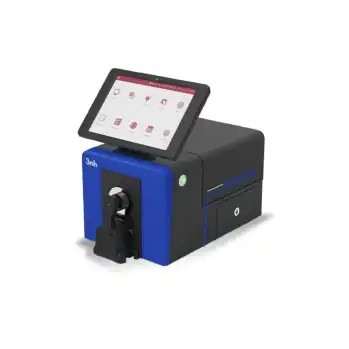
Both are benchtop instruments with d/8 reflectance and d/0 transmittance geometry and a 360–780 nm wavelength range. The TS8500 adds a 10.5-inch rotating display, 64 GB storage, a built-in camera for sample location, automatic temperature and humidity compensation, APHA/Hazen/Pt-Co and Gardner indices for liquid and chemical samples, and a wider illuminant library (41 sources including LED variants). It also supports side, upward and downward measurement orientations and handles liquid samples using a petri dish accessory.
Use the YH1000 to measure haze and luminous transmittance in clear or translucent plastic films, sheets, panels and moulded components. It is not the primary instrument for colour measurement on opaque polymer surfaces.
Sample form and presentation matter. Films, sheets, plaques and moulded parts can be measured with the appropriate geometry and aperture. Pellets, powders and liquids require suitable holders or accessories. The TS8500 is specifically designed for solid, powder, paste, granule and liquid samples using its petri dish and transmission accessories. Share the sample dimensions before final configuration.
SCI includes specular reflection and helps compare intrinsic colour while reducing the effect of gloss. SCE excludes specular reflection and more closely represents how surface gloss or texture changes visual appearance. The TS7700, YS6060 and TS8500 support both modes; the TS8500 can measure SCI and SCE simultaneously.
Colour measurement compares spectral colour or colour difference. Haze quantifies light scattering that creates a cloudy appearance in a transparent material, while luminous transmittance describes how much visible light passes through it. The required property determines the instrument and geometry.
Common references include ASTM E1164 for spectral data, ASTM E308 for CIE/CIELAB values, ASTM D2244 for colour differences on opaque parts, ASTM D1003 for haze and transmittance, ASTM E313 for yellowness or whiteness, ASTM D6290 for plastic pellets, and ASTM D1500 or D1209 for liquid colour grading. Use the method edition named in your quality plan.
Select the linked model name in the comparison table to open its dedicated product page. Final configuration should be confirmed against your sample form, dimensions and test method.