
Automotive Testing Solutions
- Tinius Olsen Authorised Dealer
- Labthink International Partner
- Binder & Sartorius Partner
- ASTM · ISO · DIN · SAE Certified
- Free Installation + AMC Support
Why Testing Matters in Automotive
The QC Challenges Every Automotive Manufacturer Faces
Every OEM audit, IATF 16949 certification, and export submission demands documented, calibrated, traceable test data. Flexitest instruments address every one of these gaps.
Climate & Temperature Failures
ECUs, sensors, battery components, and polymer parts that haven't been validated in a Dynamic Climate Chamber fail in extreme operating temperatures. Climate testing (-70°C to +180°C) eliminates this risk before market launch.
Thermal Shock in Electronic Modules
Solder joints, adhesive bonds, and polymer housings that crack under rapid temperature cycling - exactly what happens in real automotive use - are caught by Thermal Shock Chambers before they cause warranty claims or safety incidents.
Vibration-Induced Assembly Failures
Components that pass static tests but fail under road vibration - fasteners that loosen, joints that fracture, brackets that crack - are identified by Vibration Test Systems before production release.
UV Degradation of Exterior Parts
Bumpers, mirror housings, and exterior trims that fade or embrittle without documented Xenon arc weathering data (ASTM G155 / ISO 4892-2) expose you to OEM warranty rejections without defensible test evidence.
Mechanical Failures Without Test Evidence
When an automotive structural component fails in service, traceable tensile and flexural test data from a calibrated UTM is the difference between a defensible engineering response and an open warranty liability.
IATF 16949 Documentation Gaps
IATF 16949 and OEM supplier audits require calibrated instrument records, traceable certificates, and ASTM/ISO-referenced test reports. Instruments without current calibration certificates are an immediate IATF non-conformance.
Solutions for All Your Testing Needs
The Flexitest brand has been renowned for creating some of the most sophisticated material testing systems available. Our quality control systems are crafted by industry specialists who are actively involved in key standards organisations and are backed by a comprehensive network of knowledgeable and experienced service technicians. Our material Testing Systems ensure zero defect automotive parts thereby protecting our Customer’s Brand and complying with Safety standards.
Complete Product Portfolio
All Automotive Testing Instruments
Flexitest supplies a comprehensive range of ASTM and ISO certified testing instruments covering the complete material and component validation requirements for the Indian automotive industry.
Tensile, compressive, flexural, peel, and shear testing of plastics, rubbers, composites, and seatbelt webbing. Tinius Olsen ST Series — ASTM E4 certified. Delivers OEM-ready mechanical test reports.
- ASTM D638
- ASTM D790
- ASTM D695
- ASTM E4
- ISO 527
- ISO 178
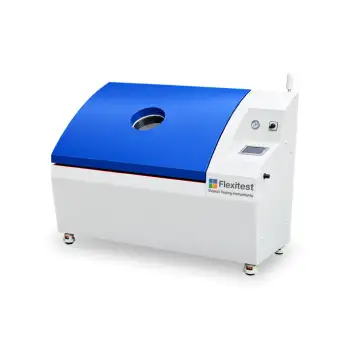
Simulates -70°C to +180°C and 10%–98% RH for testing batteries, ECUs, sensors, and polymer materials. Essential for climate validation of automotive components and assemblies.
- IEC 60068-2-1
- IEC 60068-2-1
- ISO 16750-4
- IEC 60068-2-14
- ASTM G154
- ASTM G155
- ISO 4892-2
- ISO 4892-3
- IEC 60068-2-6
- IEC 60068-2-64
- ISO 16750-3
- MIL-STD-810
- DIN 12880
- ASTM D618
- ISO 291
- IEC 60068-2-2
Labthink FT-F1 Fogging Tester (ISO 6452 / DIN 75201 / SAE J1756) and FX 3300 Air Permeability Tester. Mandatory for OEM interior material approval submissions.
- ISO 6452
- DIN 75201
- SAE J1756
- ISO 9237
Two-zone chambers rapidly cycle components between +200°C and -60°C to catch solder joint, adhesive, and polymer housing failures. IEC 60068-2-14 compliant.
- IEC 60068-2-14
- JESD22-A104
- ISO 16750-4
- MIL-STD-883
Automotive Segments We Serve
From OEM manufacturers to Tier 1 auto ancillary suppliers — every automotive segment requires documented, ASTM and ISO certified test data for every component.
OEM Automotive Manufacturers
Complete material validation lab setup for Maruti, Tata, Mahindra, Hyundai, Toyota, and global OEM supplier qualification — UTM, climate, weathering, vibration, and thermal shock from one supplier.
Auto Ancillary & Tier 1 Suppliers
Incoming QC, in-process testing, and outgoing quality documentation for plastic components, rubber seals, interior trims, wiring harnesses, and composite structural parts supplying Indian OEMs.
EV & Hybrid Vehicle Manufacturers
Battery component testing, dynamic climate and thermal shock validation for EV-specific material sets — batteries, ECUs, power electronics, and structural polymer components.
Interior Material Manufacturers
Fogging tester FT-F1, air permeability, and material QC for dashboards, door panels, headliners, seat foams, carpets, and leathers entering automotive OEM interior approval processes.
Automotive Adhesive & Sealant Suppliers
Tensile, peel, and shear testing (UTM) for structural adhesives, sealants, tapes, and bonding materials used in automotive assembly, body-in-white, and EV battery pack construction.
Polymer & Compound Suppliers
UTM, climate chamber, and weathering data for automotive-grade engineering polymers and masterbatches entering OEM material approval systems across India.
Testing Standards We Support
All instruments calibrated to ASTM, ISO, DIN, SAE, and BIS standards. We assist with method selection, OEM specification mapping, and audit-ready documentation.
Customer Testimonials
Trusted by Automotive Labs Across India
FAQ's
Common questions from automotive QC managers, R&D engineers, and procurement teams in auto manufacturing and auto ancillary supply.
What automotive testing instruments does Flexitest supply?
Flexitest supplies 7 automotive testing categories: (1) Universal Testing Machines — tensile, flexural, compressive, peel (Tinius Olsen ST Series); (2) Dynamic Climate Chambers — -70°C to +180°C, 10%–98% RH (MKFT-720); (3) Accelerated Weathering Chambers — UV fluorescent and Xenon arc (ASTM G154, G155); (4) Vibration Test Systems — road profile simulation; (5) Heating & Drying Chambers — Binder FD/ED Series, DIN 12880; (6) Testing Instruments for Auto Ancillary Products — Fogging Tester FT-F1 (ISO 6452, DIN 75201), FX 3300 Air Permeability, and more; (7) Thermal Shock Chambers — -60°C to +200°C rapid cycling. All instruments are ASTM and ISO certified with free installation across India.
What is a Dynamic Climate Chamber and what does it test in automotive applications?
A Dynamic Climate Chamber simulates extreme temperature (-70°C or -40°C to +180°C) and humidity (10%–98% RH) conditions to test automotive components, systems, and materials for performance and durability. In automotive applications they are used for: thermal management testing of cooling systems and HVAC; battery performance and reliability at extreme temperatures; endurance testing of ECUs, sensors, and electronic modules; and material testing of polymers, rubber, adhesives, and paints under climate cycling. The MKFT-720 model supplied by Flexitest provides a temperature range of -70°C to +180°C with precise humidity control and condensation protection.
What is the difference between Charpy and Izod impact testing for plastics?
The key difference is the rate of temperature change. A Dynamic Climate Chamber ramps temperature gradually (typically 1–10°C/min) with precise humidity control — ideal for long-duration endurance testing, material characterisation under climate, and battery performance validation. A Thermal Shock Chamber transfers specimens between hot and cold zones in seconds — creating extreme thermal stress to accelerate fatigue failures in solder joints, adhesive bonds, and composite structures. Dynamic Climate Chambers test performance under sustained climate conditions; Thermal Shock Chambers test structural integrity under rapid thermal cycling. Many automotive facilities require both — Flexitest supplies both instrument types.
Why is Xenon arc weathering required for automotive exterior component approval?
Most automotive OEM exterior material approval specifications require Xenon arc weathering (ASTM G155 / ISO 4892-2) because the filtered Xenon arc lamp produces the closest simulation of the full solar spectrum — UV, visible, and infrared — matching real outdoor exposure conditions most accurately. UV fluorescent chambers (ASTM G154) are used for comparative material screening but are generally not accepted as a substitute for Xenon arc in final OEM exterior approval submissions for bumpers, mirror housings, grilles, door handles, and exterior trims. Flexitest supplies both chamber types including the Benchtop Xenon Test Chamber SX/1000 for automotive exterior material approval.
What instruments are included in Testing Instruments for Auto Ancillary Products?
Moisture in hygroscopic polymers – PET, PA (Nylon), PC, ABS, PBT – causes hydrolytic degradation during processing, leading to bubbles, surface defects, splay marks, reduced molecular weight, and poor mechanical properties in the finished product. For PET, moisture must typically be below 50–200 ppm before processing. The Sartorius MA160/MA100 Moisture Analyser gives results in minutes using the Loss-on-Drying (LOD) method with halogen or infrared heating – fast, accurate, and suitable for all resin types.
Which ASTM and ISO standards apply to plastic and polymer testing instruments?
The Auto Ancillary Products category includes: the Labthink FT-F1 Fogging Tester — measures volatile substance emissions from dashboards, seat foams, headliners, adhesives, leathers, and rubbers to ISO 6452, DIN 75201, and SAE J1756 using reflectometric, gravimetric, and haze methods (6 simultaneous test stations); the FX 3300 Lab Air Permeability Tester — measures breathability of fabrics, filter media, and materials used in automotive interiors; and other specialised instruments for auto ancillary component testing. This category is specifically designed for Tier 1 interior material suppliers and auto ancillary manufacturers requiring compliance data for OEM interior material approval programmes.
How do Binder Heating and Drying Chambers support automotive testing?
Binder Heating and Drying Chambers serve two critical functions: (1) Sample conditioning — ASTM D638, D790, D256, and most automotive test standards require specimens conditioned at 23°C ±2°C and 50% RH for 24–88 hours (ASTM D618 / ISO 291) before mechanical testing. In India’s variable climate, unconditioned specimens give non-comparable results that fail OEM audit verification. (2) Resin pre-drying — PA, PC, PBT, and PPS resins in automotive connectors and housings must be dried before injection moulding to prevent weld line failures. Binder FD Series forced convection ensures ±0.5°C temperature uniformity across all tray positions — meeting DIN 12880 requirements for precision laboratory ovens.