
Battery Test Performance Climate Solutions
- Home
- EV Industry
- Battery Test Performance Climate Solutions
Proving EV Batteries Fit for Every Climate
In the EV industry, guaranteeing lithium-ion battery safety and reliability isn’t optional, it’s fundamental. Specialized test chambers allow engineers to push cells and modules beyond their everyday limits, simulating extreme temperatures, sudden shifts in climate, and other environmental stressors. This rigorous scrutiny helps spot weaknesses early, ensuring that only robust, high-quality batteries move forward.
m-ion batteries are composed of complex material layers, welds, and adhesives all of which must be verified for strength and consistency. Standard testing grips and fixtures can do much of this work, but sometimes a unique battery design calls for a more tailored approach. Custom fixtures and engineered solutions enable precise, repeat
testing, providing better insights and helping to optimize product performance. By combining state-of-the-art battery test chambers with these specialized testing strategies, EV manufacturers can confidently bring safer, more durable energy storage systems to market and keep the world moving toward cleaner mobility.
Model LIT MK -240
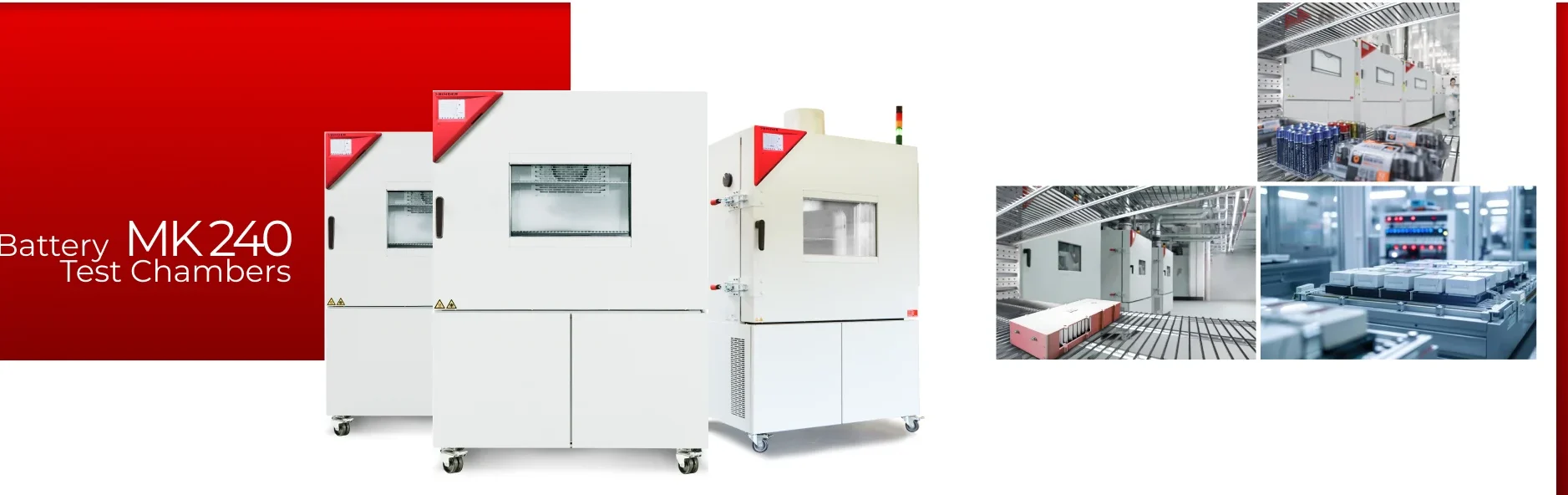
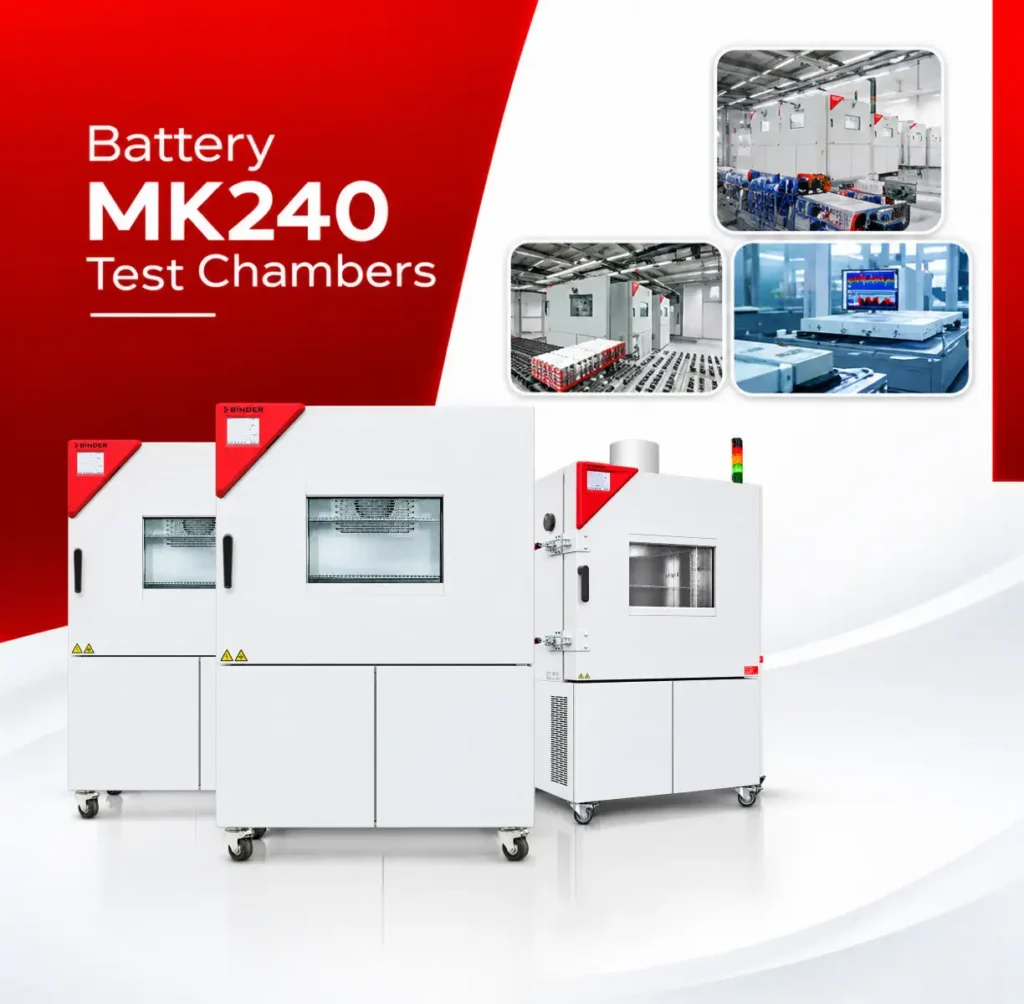

Model Lit MK 240 is a temperature test chamber engineered to recreate a broad range of environmental conditions from deep cold to high heat essential for validating EV battery performance. In the electric vehicle industry, it’s used to push cells and modules beyond their comfort zones, ensuring they can withstand real-world scenarios. By precisely controlling and cycling temperatures, engineers can evaluate how materials, adhesives, and welds react under stress. This leads to identifying potential weaknesses early and refining designs before mass production. As a result, manufacturers gain a reliable tool for advancing battery safety, longevity, and overall quality.
BINDER MK series chamber is suitable for all heat and cold tests between -40 °C and 180 °C.
Submit Your Details to Download Brochure!


Model LIT MK- 720
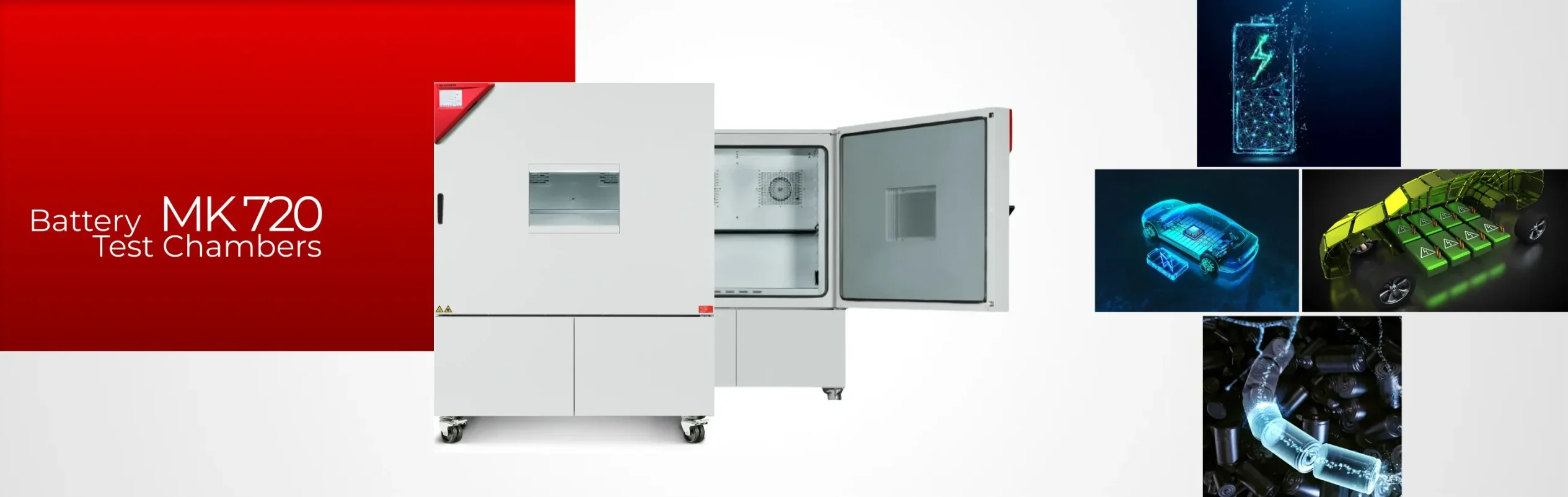
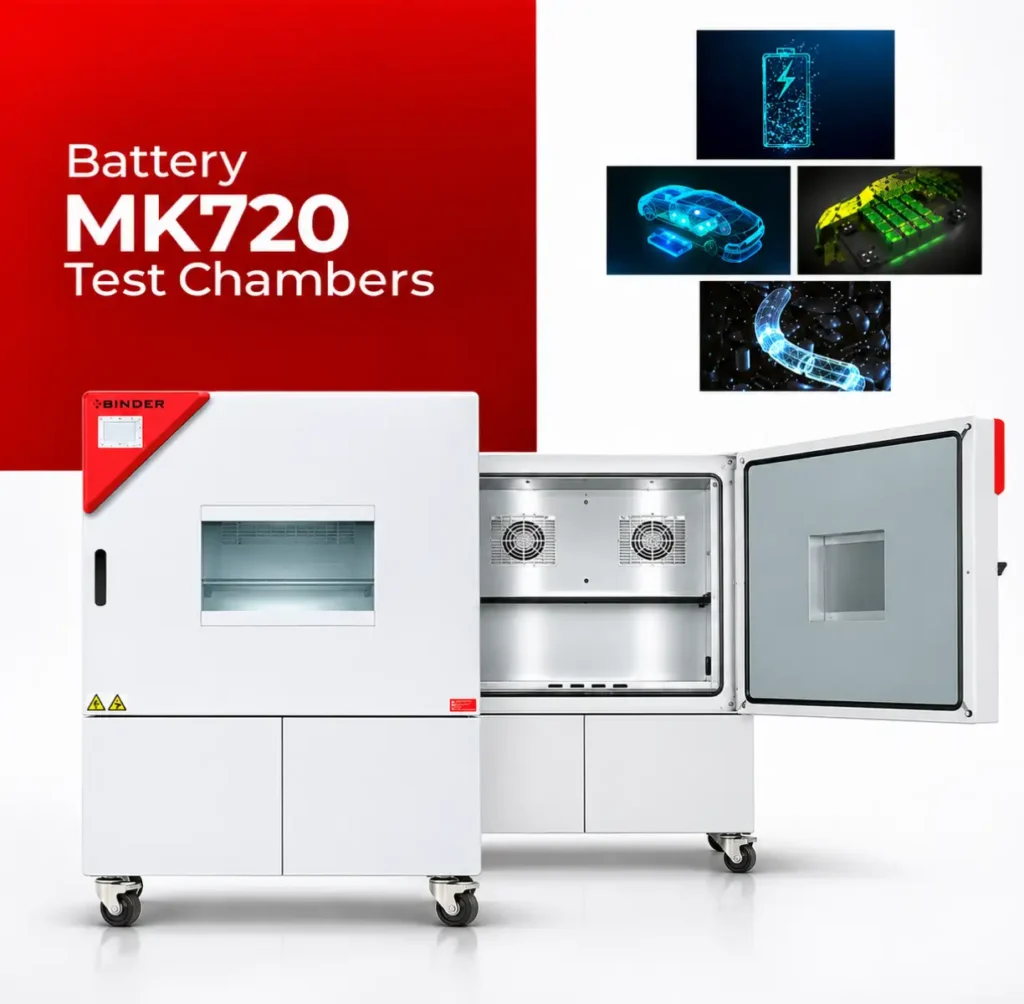
Model MK 720 test chamber is designed to push EV batteries and components to their limits, ensuring they can withstand the widest range of real-world conditions. It offers an extended temperature spectrum and precise climate control, enabling engineers to simulate everything from scorching hot highways to sub-zero winters. With rapid temperature transitions and uniform heat distribution, it delivers consistent, reliable data on battery stability and performance. By providing critical insights into material resilience, adhesive integrity, and cell durability, the MK 720 helps EV manufacturers refine their designs and strengthen overall product quality. In essence, it’s a powerful tool that helps the EV industry confidently bring safer, longer-lasting batteries to market.
Submit Your Details to Download Brochure!
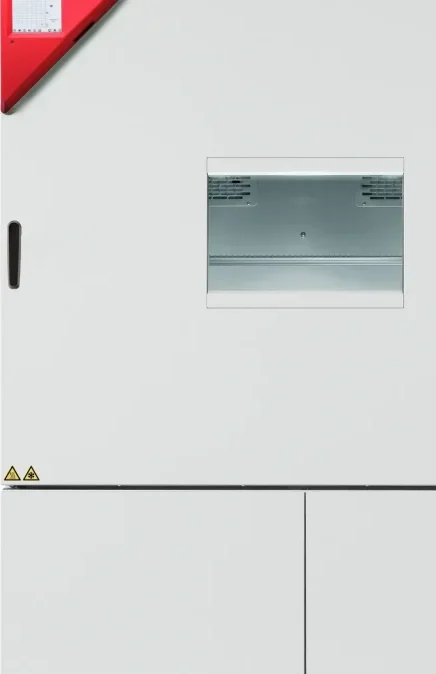
Customized Solutions for EUCAR Safety Standards

Technical Specifications
Technical specifications for the BINDER LIT MK series climate chambers – precise temperature control from -40°C to +110°C for comprehensive environmental simulation.
| LIT MK 240 | LIT MK 720 | |
|---|---|---|
| Interior volume [L] | 228 | 734 |
| Net weight of the unit (empty) [kg] | 375 | 584 |
| Permitted load [kg] | 70 | 160 |
| Permitted load of individual shelf [kg] | 30 | 40 |
| Wall clearance, rear [mm] | 300 | 300 |
| Wall clearance, side [mm] | 200 | 200 |
| Interior Dimensions | ||
| Width [mm] | 735 | 1200 |
| Height [mm] | 700 | 1020 |
| Depth [mm] | 443 | 600 |
| Housing Dimensions (not incl. fittings and connections) | ||
| Net width [mm] | 1335 | 1794 |
| Net height [mm] | 1929 | 2005 |
| Net depth [mm] | 925 | 1186 |
| Technical Data: Temperature | ||
| Temperature range [°C] | -40 … 110 | -40 … 110 |
| Temperature uniformity dependent on set value [± K] | 0.1 … 1.2 | 0.3 … 2 |
| Temperature fluctuation dependent on set value [± K] | 0.1 … 0.5 | 0.1 … 0.5 |
| Average heating-up rate acc. to IEC 60068-3-5 [K/min] | 5 | 4 |
| Average cooling down rate acc. to IEC 60068-3-5 [K/min] | 3.5 | 3.4 |
| Electrical Data | ||
| Nominal power (400 V version) [kW] | 5.6 | 8.7 |
| Nominal power (480 V version) [kW] | 5.6 | 8.7 |
| Fixtures | ||
| Number of shelves (std./max.) | 1 / 6 | 1 / 11 |
Interested in the BINDER LIT MK Climate Chambers?
Contact our team for pricing, demo, and application-specific recommendations for your temperature testing needs.
FAQ's
Frequently Asked Questions (FAQs) – Universal Testing Machines
What is the BINDER LIT MK temperature test chamber and why is it used for EV battery testing?
The BINDER LIT MK series are temperature test chambers that recreate conditions from deep cold to high heat to validate lithium-ion cells and modules. Engineers cycle temperatures to see how materials, adhesives and welds react under stress, finding weaknesses before mass production. Flexitest supplies the LIT MK 240 and LIT MK 720 for EV battery safety and reliability validation.
What temperature range and performance do the LIT MK 240 and LIT MK 720 offer?
Both models cover -40°C to +110°C with temperature fluctuation of ±0.1 to 0.5 K. Uniformity is ±0.1 to 1.2 K on the MK 240 and ±0.3 to 2 K on the MK 720, depending on the set value. Average heating and cooling rates per IEC 60068-3-5 are 5 and 3.5 K/min (MK 240) and 4 and 3.4 K/min (MK 720).
What is the difference between the LIT MK 240 and LIT MK 720?
The LIT MK 240 has a 228 L interior, 70 kg load (30 kg per shelf) and a 50 mm access port, at 5.6 kW. The LIT MK 720 has a 734 L interior, 160 kg load (40 kg per shelf), two 80 mm access ports and up to 11 shelves, at 8.7 kW. Choose based on specimen size, weight and cabling needs.
Which standards apply to cell-level performance testing of EV batteries in a temperature chamber?
IEC 62660-1:2018 specifies performance and life testing of lithium-ion cells for battery electric and hybrid electric vehicles, including capacity tests at standard conditions (23 ± 2 °C) and optionally at low temperature. IEC 62660-2 covers reliability and abuse testing, and IEC 62660-3 covers safety requirements. The -40 °C to +110 °C range covers these conditions.
Which standards apply to testing EV battery packs and systems?
ISO 12405-4:2018 specifies test procedures for the performance, reliability and electrical functionality of lithium-ion traction battery packs and systems, for both high-power and high-energy applications. ISO 12405-3:2014 covers the safety performance requirements. Cell-level testing is addressed separately in the IEC 62660 series. A temperature chamber supplies the controlled thermal conditions these procedures require.
Which environmental testing standards apply to EV battery modules and components?
The IEC 60068-2 series defines the basic temperature tests: IEC 60068-2-1 (Test A: Cold), IEC 60068-2-2 (Test B: Dry heat) and IEC 60068-2-14 (Test N: Change of temperature). India has adopted these as IS/IEC standards. The LIT MK chambers deliver the constant and cycled temperature conditions these tests specify for modules, enclosures and battery components.
How does ISO 16750-4 relate to temperature testing of EV battery electronics?
ISO 16750-4:2023 specifies climatic loads and tests for electrical and electronic equipment in road vehicles, including low and high temperature tests and temperature cycling. It applies to equipment such as battery management electronics and charging components. The temperature-based tests can be run in a chamber like the LIT MK, which offers precise control from -40°C to +110°C.
What safety features are available for testing lithium-ion batteries in the LIT MK chambers?
The LIT MK chambers are fitted with safety equipment as standard, including CO, H₂ and O₂ monitoring, inertisation equipment, CO₂ fire suppression, a reversible stainless steel pressure relief flap, reinforced door locking, and an independent Class 2 temperature safety device per DIN 12880. TÜV SÜD has confirmed the LIT MK 240 and LIT MK 720 as suitable for EUCAR hazard level 6.
What does EUCAR hazard level 6 suitability mean for a battery test chamber?
EUCAR hazard levels classify how severely a battery reacts to abuse or failure, rising with severity. TÜV SÜD has confirmed that the LIT MK 240 and LIT MK 720 are suitable for tests up to hazard level 6, thanks to their built-in safety equipment. Operators should still assess the risk of each lithium-ion test and apply an appropriate safety concept.
How are tests programmed, recorded and supported on the LIT MK chambers?
Tests are programmed on the touchscreen using time-segment or real-time programming. Data is stored in an internal data logger, exported via USB in an open format, or managed through APT-COM software and Ethernet. Calibration records should meet ISO 17025 requirements. Flexitest provides free installation and training, calibration, AMC and live online troubleshooting across India.
Related Machines
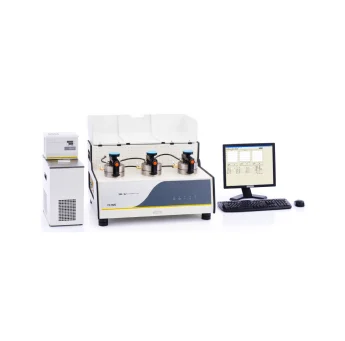
Two-cell vacuum method gas permeability tester for measuring oxygen, carbon dioxide and nitrogen transmission through films and sheets.
View Details →
Labthink C130H measures gas transmission, solubility and diffusion coefficients of films and sheets by the differential pressure method.
View Details →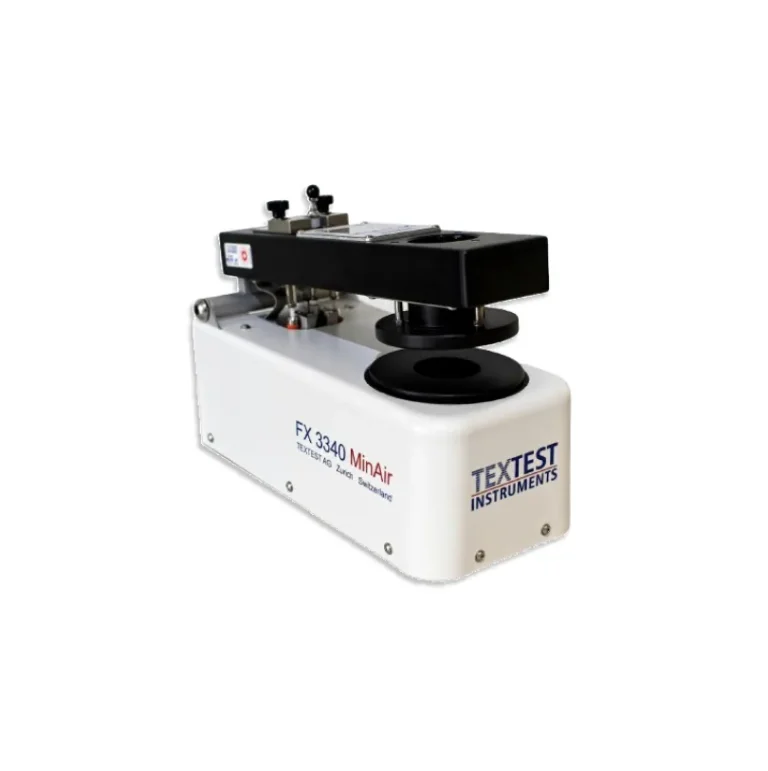
Explore Textest air permeability testers for fabrics and technical textiles. Compare laboratory and production options with guidance from Flexitest.
View Details →
NEWARE battery cyclers run controlled charge and discharge cycles on cells and modules to measure capacity, life and EV battery performance.
View Details →