
Melt Flow Indexer
- Home
- Packaging Testing Equipments
- Melt Flow Indexer
Precision Measurement for Superior Packaging Performance
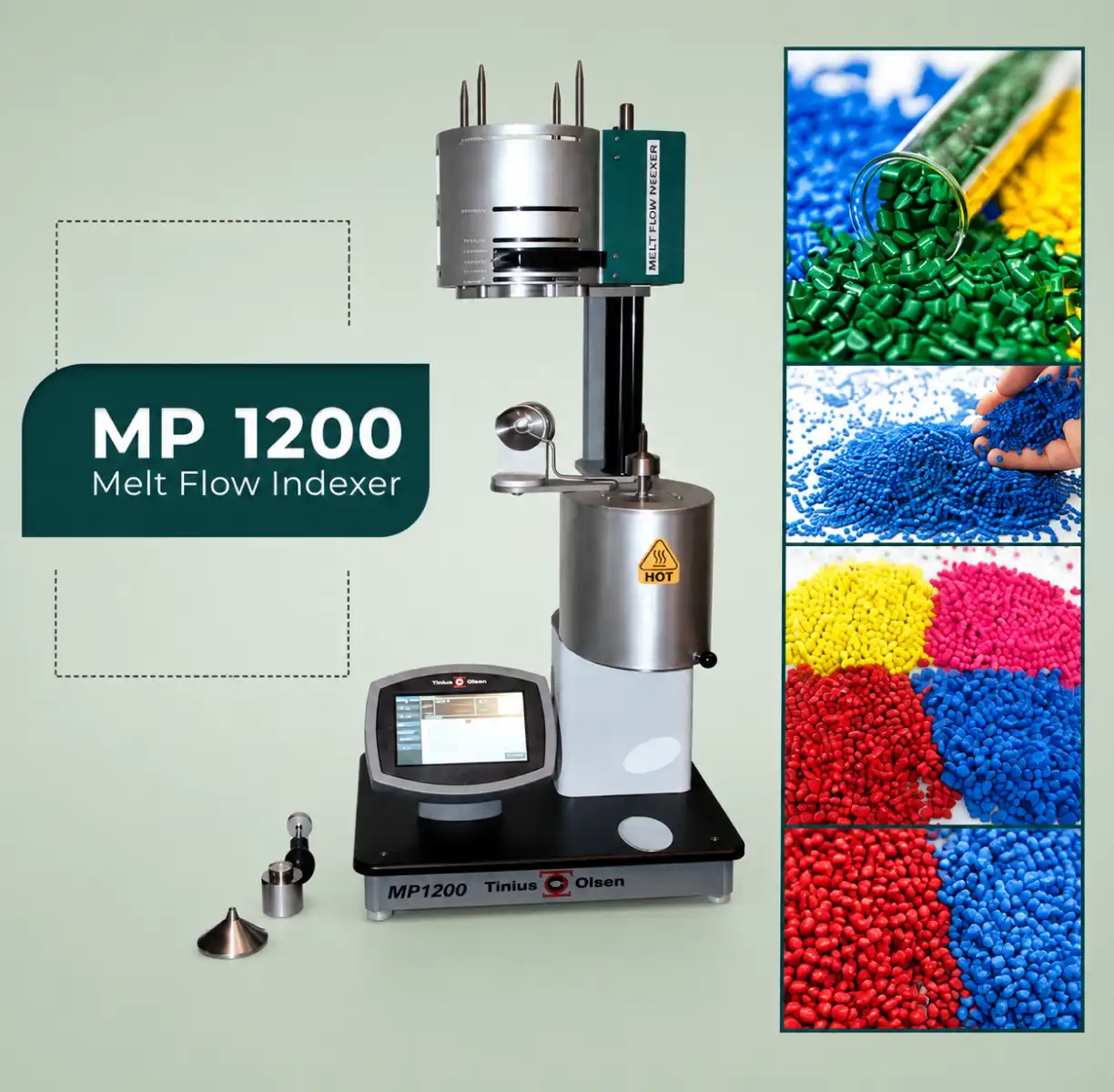
MP 1200 Melt Flow Melt Flow Index
MP1200 is an advanced melt flow tester that integrates the latest in melt flow measurement technology, designed to simplify and enhance polymer testing across various industries, including packaging, automotive, and more. Built to comply with international standards such as ASTM D1238 and ISO 1133-1 & 2, the MP1200 ensures accurate, repeatable, and reliable results, providing critical data for quality control and material selection.
Submit Your Details to Download Brochure!
Features
- Three-zone band heater.
- Touch-screen control.
- Quick die release.
- Powerful data analysis and control software.
- USB connectivity.
- Tapered weight design
Melt Flow Index : The flow of quality in packaging
Related Machines
❓ Frequently Asked Questions – Melt Flow Index Testing
What is a Melt Flow Index tester and why is it used in packaging material testing?
A Melt Flow Index (MFI) tester measures the flow rate of molten thermoplastic polymer through a standardised die under defined temperature and load conditions. It evaluates the processability, viscosity, and molecular weight consistency of plastics used in packaging. Per ASTM D1238 and ISO 1133-1, MFI testing is essential for incoming raw material inspection, lot-to-lot consistency verification, and quality control of polyethylene, polypropylene, and other thermoplastics used in packaging films and containers.
What is ASTM D1238 and how is it used for packaging plastic testing?
ASTM D1238 is the Standard Test Method for Melt Flow Rates of Thermoplastics by Extrusion Plastometer. The latest version ASTM D1238:2023 defines the use of force-controlled extrusion plastometers for the determination of melt mass-flow rate (MFR) and melt volume-flow rate (MVR). It is widely used in packaging to verify that PE, PP, and other thermoplastic packaging materials meet specified flow rate requirements before production, ensuring consistent film quality and processability on extrusion and lamination lines.
What is ISO 1133-1 and what does it measure for thermoplastic packaging materials?
ISO 1133-1:2022 specifies two procedures for the determination of the melt mass-flow rate (MFR) and the melt volume-flow rate (MVR) of thermoplastic materials under specified conditions of temperature and load. Procedure A is a mass-measurement method. Procedure B is a displacement-measurement method. Both procedures are used primarily for quality control of packaging plastics including HDPE, LDPE, LLDPE, and PP — the primary materials used in flexible and rigid packaging manufacturing.
What is the difference between ASTM D1238 and ISO 1133-1 for melt flow testing?
The methods for melt flow index testing to ASTM D1238 and ISO 1133 on thermoplastics are equivalent but not identical, as they differ in some respects, especially in terms of test procedure. In ASTM D1238, the duration of the preheating phase is standardised at 7±0.5 minutes with very strict tolerance; in ISO 1133-1 it is specified to at least 5 minutes, but can also be significantly longer. For packaging laboratories in India, ASTM D1238 is typically specified by North American buyers while ISO 1133-1 is required for European and international market compliance
What is the difference between MFI, MFR, and MVR in melt flow testing?
MFI (Melt Flow Index) is the older term used predominantly in North America per ASTM D1238. MFR (Melt Flow Rate) is the ISO 1133 term used in international standards. They describe the same measurement — grams of polymer extruded through a standardised die per 10 minutes under defined conditions. MVR (Melt Volume-Flow Rate) measures volumetric flow and is particularly useful when comparing filled versus unfilled packaging grades or polymers with different filler content per ISO 1133-1 Procedure B.
What MFI values are typical for common packaging plastics and what do they indicate?
MFI values directly indicate the processability of packaging polymers. Low MFI values (0.1–2 g/10 min) indicate high molecular weight, high-strength materials suited for heavy-duty packaging films and pipes. Medium MFI values (2–10 g/10 min) suit blown film extrusion for flexible packaging. High MFI values (above 10 g/10 min) indicate easy-flow grades used for injection-moulded containers and caps. Per ASTM D1238 and ISO 1133-1, consistent MFI values across batches confirm raw material uniformity for packaging production.
Which packaging polymers are tested using a Melt Flow Index tester?
Melt flow index testing per ASTM D1238 and ISO 1133-1 is applied to all major thermoplastics used in packaging including HDPE (bottles, drums, rigid containers), LDPE and LLDPE (flexible films, shrink films, pouches), polypropylene PP (woven sacks, BOPP films, caps and closures), polystyrene PS (food trays, disposable containers), and PET (bottles, laminates). For PVC packaging materials, ASTM D3364 specifies the applicable melt flow rate test method.
How does MFI testing support quality control in a packaging film manufacturing line?
MFI testing provides a rapid, economical indication of the average molecular weight and processing viscosity of a polymer, enabling incoming material inspection, lot-to-lot consistency verification, and basic processability screening across the packaging industry. When MFI values deviate from specification per ASTM D1238 or ISO 1133-1, it signals batch-to-batch variation in raw material supply — allowing manufacturers to reject non-conforming resin before it enters the extrusion or lamination line and causes film defects or seal failures.
How should a Melt Flow Index tester be calibrated and maintained for accurate results?
Melt flow index testers must be calibrated using certified reference materials with known MFR values traceable to national standards, ensuring results comply with ASTM D1238:2023 and ISO 1133-1:2022 requirements. The capillary die dimensions of 2.095 mm diameter and 8.000 mm length must be verified regularly. The barrel, piston, and die must be cleaned after every test to prevent polymer degradation contamination. Calibration records must be maintained per ISO 17025 laboratory competence requirements for traceability and regulatory submissions.