
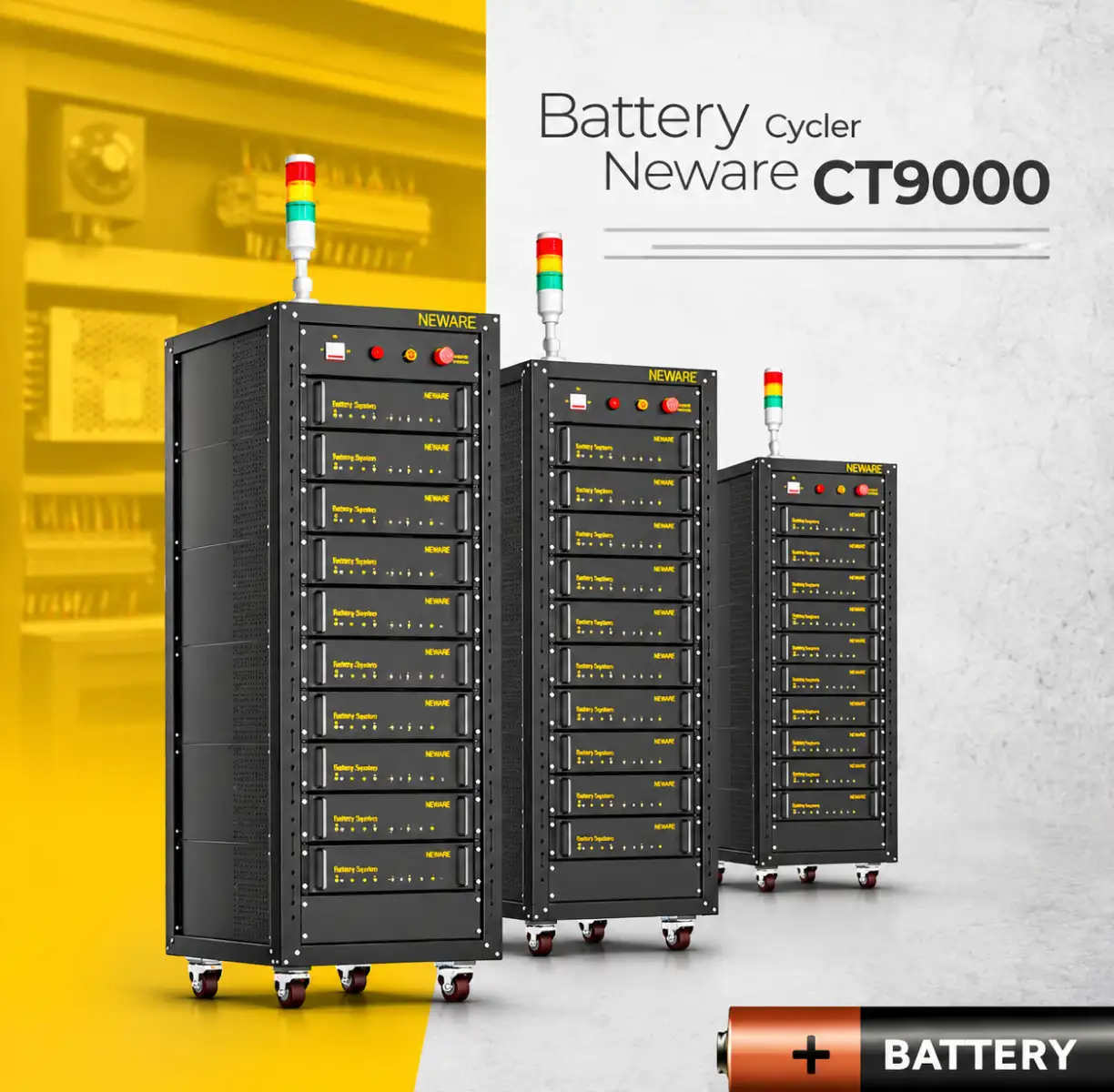
Battery Cycler NEWARE

  1. Home
  2. EV Industry
  3. Battery Cycler NEWARE

Model CT-9000 Ultra Precision Battery Testing System

CT9000 Battery cycler neware
ct9000 battery cycler neware product banner mobile

The NEWARE CT 9000 battery testing system supports cycle-life, charge/discharge-rate, pulse-simulation and DC internal-resistance tests, with dQ/dV curves for analysing cell behaviour. The brochure describes coin-cell, pouch-cell and three-electrode research applications. Select the voltage and current range and channel count for the cells and test programme you intend to run, and confirm the supplied configuration before ordering.

Key Considerations

Key Considerations when selecting a testing system for Battery Cycler NEWARE Applications.

Battery Cycler NEWARE Cycle Life Test

Cycle Life Test

Rate charging discharging rate

Rate Charging / Discharging Test

Battery Cycler NEWARE Pulse simulation test

Pulse Simulation Test

Battery Cycler NEWARE DCIR-test

DCIR Test

Battery Cycler NEWARE DQ DV curve

dQ/dV Curve

Features

Battery Cycler NEWARE

Voltage & Current Accuracy ±0.02% F.S.

Battery Cycler NEWARE

Recording Frequency 1000Hz

Battery Cycler NEWARE

Current Response Time ≤100 μs

Battery Cycler NEWARE Pulse simulation test

Minimum Pulse Width 400 μs

Battery Cycler NEWARE

Resolution Ratio AD 16Bit

Battery Cycler NEWARE

Data Security

Battery Cycler NEWARE

Test Security

Battery Cycler NEWARE

Off-Line Test 1GB

Battery Cycler NEWARE

GSM

Battery Cycler NEWARE

SMBus Communication

FAQ's

 Frequently Asked Questions (FAQs) – NEWARE CT-9000 Battery Cycler

A battery cycler applies controlled charge and discharge currents to cells and records voltage, current and capacity. The NEWARE CT-9000 Ultra Precision Battery Testing System supports cycle-life, charge/discharge-rate, pulse-simulation and DC internal-resistance tests, with dQ/dV curves for analysing cell behaviour. It suits coin cells, pouch cells and three-electrode research cells.

The CT-9000 supports cycle life testing, rate charging and discharging tests, pulse simulation tests, DCIR (DC internal resistance) tests and dQ/dV curve analysis. Together these characterise capacity retention, rate capability, power response and ageing behaviour, giving R&D and quality teams the data needed to compare cell chemistries, designs and production batches.

IEC 62660-1:2018 specifies performance and life testing of lithium-ion cells for battery electric and hybrid electric vehicles, including capacity, power and cycle tests. IEC 62660-2 and IEC 62660-3 cover reliability, abuse and safety separately. Low-temperature tests need a temperature chamber, such as the BINDER LIT MK chambers Flexitest supplies.

IEC 61960-3:2017 specifies performance tests for portable prismatic and cylindrical lithium cells, and IEC 61960-4:2024 does so for coin cells. Both cover electrical tests such as discharge performance, capacity recovery after storage and cycle life endurance. A battery cycler like the CT-9000 provides the charge and discharge control these tests require.

No. A cycler is used for performance characterisation. IEC 61960 covers performance, while IEC 62133-2 is the separate safety standard for portable lithium cells, covering abuse conditions such as overcharge and short circuit. Safety and abuse testing needs dedicated safety equipment. Contact Flexitest to confirm how the CT-9000 fits your test programme and standards.

The CT-9000 specifies voltage and current accuracy of ±0.02% F.S., a 1000 Hz recording frequency, a current response time of ≤100 µs and a minimum pulse width of 400 µs, with 16-bit AD resolution. This precision and speed capture fast transients, pulse responses and small voltage changes that affect capacity and resistance calculations.

Pulse simulation applies short current pulses that mimic the sudden power demands of EV acceleration and regeneration. DCIR (DC internal resistance) is calculated from the voltage response to such a current step. Rising internal resistance indicates ageing and limits delivered power. The CT-9000’s 400 µs minimum pulse width and ≤100 µs current response support fast pulse measurements.

A dQ/dV curve plots the change in capacity against the change in voltage during charge or discharge. Peaks in the curve correspond to electrochemical reactions in the electrodes, so shifts and shrinking peaks over cycling reveal degradation mechanisms and capacity loss. The CT-9000 generates dQ/dV curves from its high-resolution voltage and capacity data.

The CT-9000 features data security, test security and off-line testing with 1 GB storage, so test data can be retained if communication with the PC is interrupted. It also supports SMBus communication, which allows data from smart battery packs and battery management systems to be read during testing. A 1000 Hz recording frequency keeps data detailed.

Select the voltage range, current range and channel count to match the cells and test programme you intend to run, and confirm the supplied configuration before ordering. Calibration records should meet ISO 17025 traceability requirements. Flexitest provides free installation and training, calibration, AMC and live online troubleshooting through branches across India.


Related Machines

Battery Test Performance Climate Solutions

Climate and temperature test chambers for EV batteries, proving cell and module safety under extreme heat, cold and rapid climate changes.

View Details
Gas Permeability Tester

Gas permeability testing for EV battery films, separators and pouch materials, measuring transmission rates that affect cell life and safety.

View Details
Integrated Air Permeability Tester

Integrated air permeability tester (910H) measures airflow resistance of battery separators and technical materials with touchscreen control.

View Details
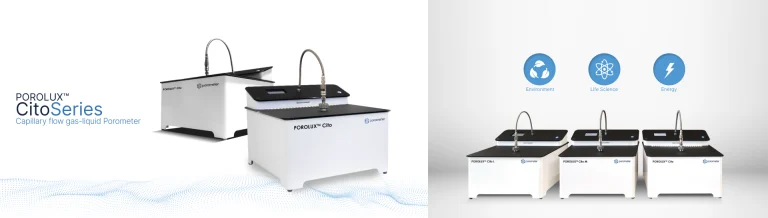
Capillary Flow Porometer Ev Industry

Measure pore size and distribution in battery separators, fuel cell membranes and filtration media with POROLUX Revo porometers from Flexitest.

View Details
×
Highlights
Scroll to Top
Flexitest logo