Automotive Fogging Tester
Automotive Interior Material Testing
- Home
- Automotive
- Testing Instruments for Auto Ancilary Products
- FT-F1 Fogging Tester
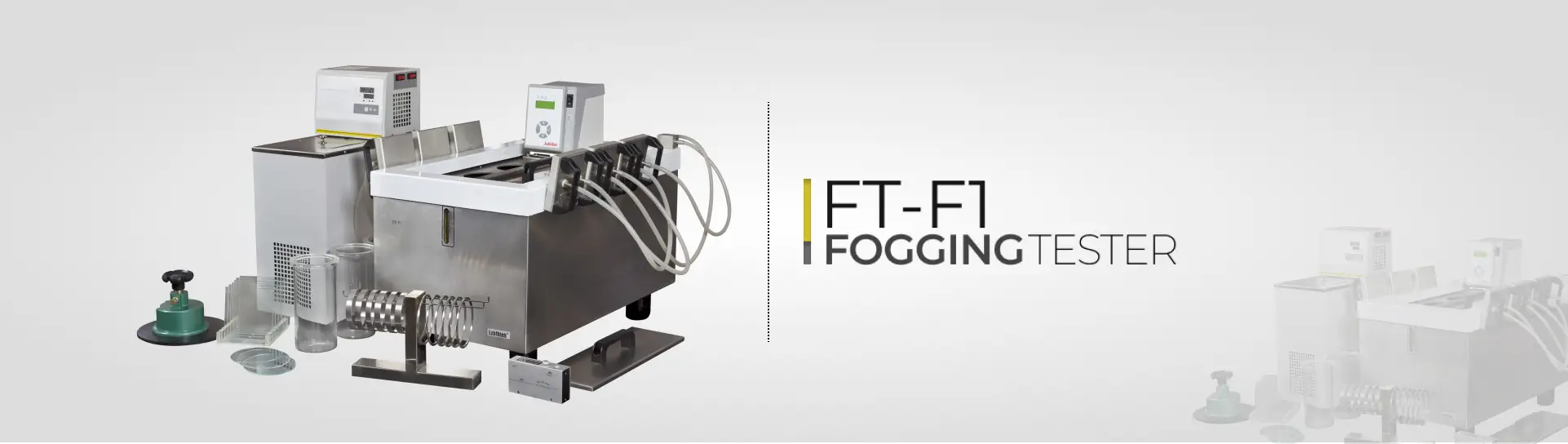

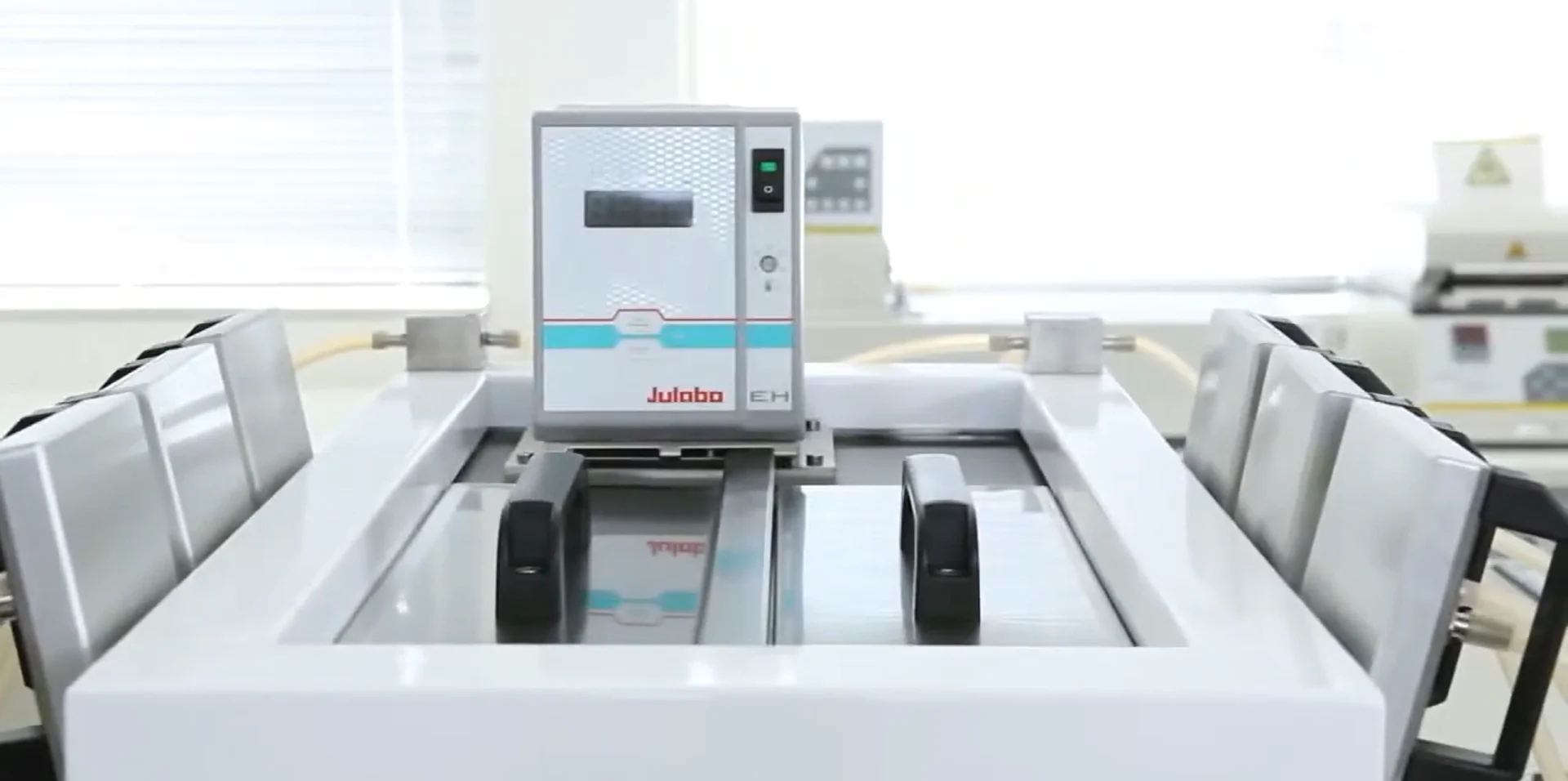
The FT-F1 Fogging Tester is designed to evaluate the fogging characteristics of volatile substances released from automotive interior materials such as leather, adhesives, plastics, foams, textiles, and non-woven fabrics. The instrument simulates high-temperature conditions to determine whether these materials produce fogging deposits that may affect visibility and automotive safety.
Features
- Precision Measurement: Accurately measures volatile substances causing fogging.
- Versatile Testing: Suitable for plastics, leathers, textiles, and adhesives.
- Compliance: Meets international fogging test standards (ISO, DIN).
- Durable Construction: Built to withstand rigorous testing conditions.
- Wide range and high precision of temperature control device to support the combinations of non-standard test conditions
- 6 test stations can perform specimen test or blank test simultaneously
Where FT-F1 Creates Immediate Value
Supplier Material Qualification
Compare fogging tendency across vendors before approving interior materials for production use.
Engineering Change Validation
Validate reformulated films, adhesives, or trim compositions before launch or process change sign-off.
Complaint and Root Cause Analysis
Investigate haze, odor, and interior deposit issues with traceable lab data and repeatable setup conditions.
Submit Your Details to Download Brochure!
Technical Specifications
| Specifications | FT-F1 Fogging Tester |
|---|---|
| Temperature Range of High-Temperature Bath | Room temperature ~ 150°C (room temperature ~ 280°C is optional) |
| Accuracy | ±0.1°C (150°C) |
| Temperature Range of Low-Temperature Bath | 0 ~ 100°C |
| Accuracy | ±0.1°C |
| Size of High-Temperature Bath | 670 mm (L) x 490 mm (W) x 540 mm (H) |
| Size of Low-Temperature Bath | 400 mm (L) x 220 mm (W) x 520 mm (H) |
| Net Weight of High-Temperature Bath | 32 kg (except the weight of heat conducting medium) |
| Net Weight of Low-Temperature Bath | 15 kg (except the weight of heat conducting medium) |
| Power Supply | 220VAC 50Hz / 120VAC 60Hz |
Application Scope
| Primary objective | Evaluate fogging and volatile behavior of interior materials under controlled testing conditions |
|---|---|
| Typical materials | Films, fabrics, leather, polymer trims, foams, and adhesive systems |
| Typical users | Automotive QA labs, supplier quality teams, and material R&D centers |
| Support model | Installation, training, troubleshooting support, and warranty-backed service |
What our clients say

FAQ's
Frequently Asked Questions (FAQs) –FT-F1 Fogging Tester
It is a crucial test for assessing and controlling the release of volatile substances in materials used in vehicles and enclosed spaces. Home / Laboratories / Security and health / Emission tests in car interiors / Fogging test.
The FT-F1 heats a preconditioned sample to release volatile substances. These vapors condense on a cooled glass plate or aluminum foil. The fogging value is then determined by measuring gloss, haze, or weight differences before and after condensation.
The FT-F1 supports:
Gloss Method – Measures gloss difference before and after condensation.
Haze Method – Measures change in haze values.
Weighing Method – Measures weight change on aluminum foil.
The FT-F1 Fogging Tester includes six independent test stations, allowing simultaneous testing for higher laboratory efficiency.
Most automotive fogging tests take 2 to 3 hours, depending on the material type and standard method used.
It meets major global and OEM standards, including ISO 6452, DIN 75201, SAE J1756, QB/T 2728, BS EN 14288, PV 3920, PV 3015, ES-X83231, NES M0161, D45 1727, GM 9305P, and TSM 0503G.
The FT-F1 includes a high-temperature bath, low-temperature bath, cooling plate, beakers, fixtures, glass plates, aluminum foil, and optional gloss/haze meters, enabling complete fogging evaluation.
The FT-F1 operates on a standard AC power supply, ensuring compatibility with most laboratory installations.
Yes. Although designed for automotive interiors, it can test any material that may emit volatiles under heat, including polymers and packaging materials.
Yes, PAN-India support is available for installation, operator training and calibration.
Yes, Flexitest provides on-site or remote operator training to ensure accurate testing and correct test procedures.
At Flexitest, we provide world-class testing instruments backed by PAN-India support, installation services, operator training, and calibration services tailored to your laboratory needs. With trusted quality, service excellence and technical expertise, we are your partner in achieving precise and reliable material testing outcomes.