
01. What is capillary flow porometry?
Gas-liquid porometry covers pore sizes from 500 µm down to 13 nm, while liquid-liquid porometry extends into the nanofiltration range down to 2 nm – making capillary flow porometry one of the widest-range pore characterisation techniques available.
02. How does capillary flow porometry work?
P= applied pressure
γ = surface tension of the wetting liquid
θ= contact angle between liquid and pore wall
D= pore diameter
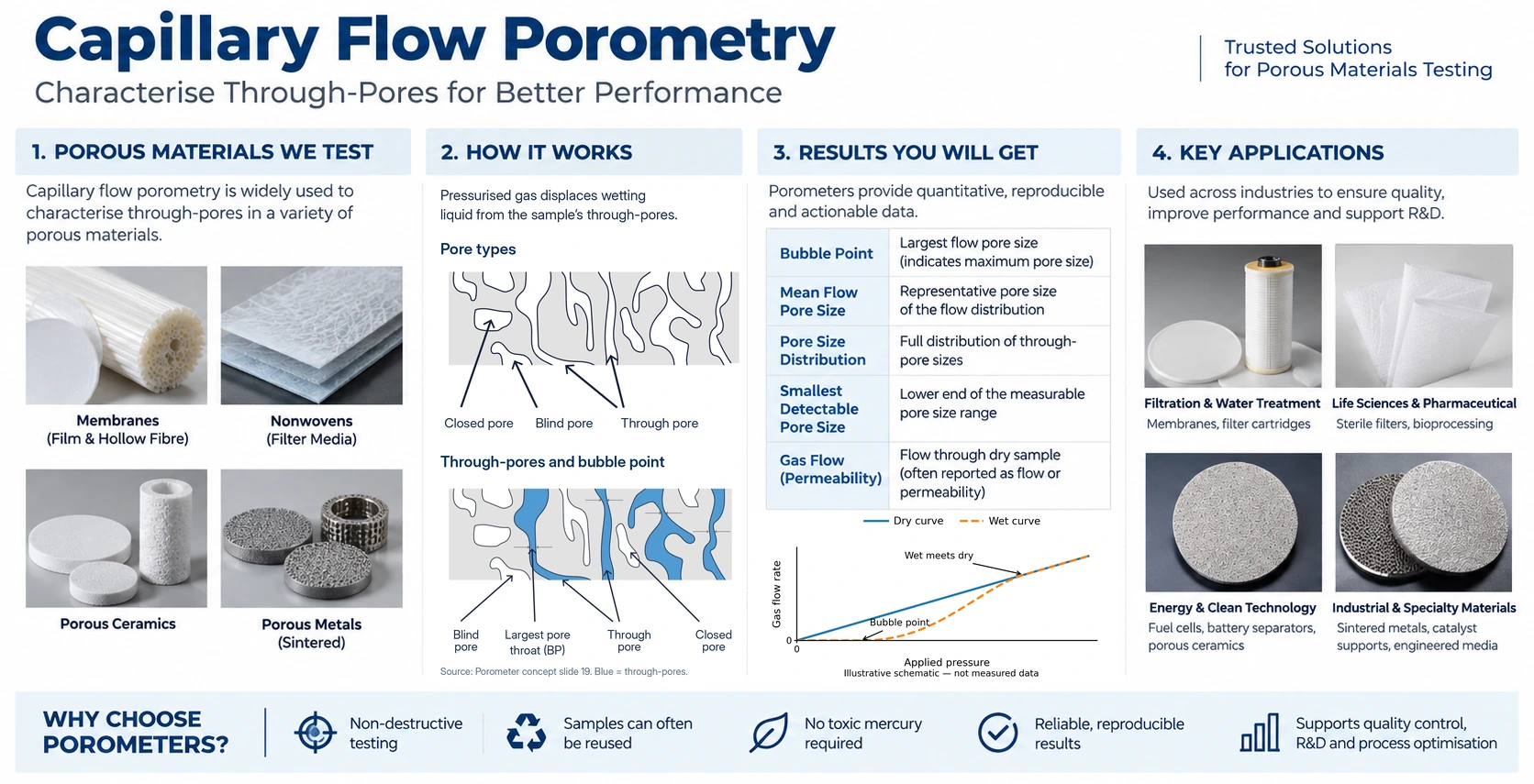
Key parameters measured
Capillary flow porometry provides several critical parameters used in product validation, quality control, and R&D:
Bubble point pore size
The largest through pore in the material
Mean flow pore size
Most representative pore size of the material
Smallest pore size
Smallest detectable through pore
Cumulative distribution
Cumulative pore size distribution across the range
Differential distribution
Differential pore size distribution profile
Air permeability
Gas flow rate through the dry sample
Technique comparison at a glance
03. Applications: where capillary flow porometry is used
Capillary flow porometry is used across many industries that rely on porous materials. Common sample types include:
- Polymeric membranes — flat sheet and hollow fiber
- Nonwovens and technical textiles
- Ceramic membranes and tubes
- Porous metal discs and metal fiber media
- Specialty filtration papers
- Any other filter media containing through pores
Industries using capillary flow porometry
04. Why pore size distribution matters
Two materials with the same average pore size can perform very differently
if their pore size distributions differ.
A narrow distribution indicates a uniform structure and reliable filtration
efficiency.
A wide distribution can mean inconsistent performance, premature failure,
or contamination breakthrough.
By accurately characterising pore size distribution, capillary flow porometry helps:
- R&D teams — design better materials with tighter structural control
- QA/QC teams — catch defects before products ship
- Production teams — maintain batch-to-batch consistency
- End users — select the right media for the right application
05. Advantages of capillary flow porometry
Capillary flow porometry offers several distinct advantages over techniques such as mercury intrusion porosimetry:
- Measures only functional through pores that contribute to flow performance
- Mercury-free - no toxic reagents required
- Fast, automated, and reproducible - suited to both R&D and routine QC
- Non-destructive - the same sample can be reused or archived after testing
- Wide measurement range spanning multiple material classes
- ISO and ASTM compliant - results traceable to international standards
06. Choosing the right porometer
Modern capillary flow porometers are fully automated and user-friendly. When evaluating a porometer for your lab, look for:
- Wide pressure and flow range to cover your full material spectrum
- High-resolution sensors for nanoscale accuracy
- Real-time software monitoring with data export capability
- Support for both GLP and LLP porometry modes
- Compliance with ASTM and ISO international testing standards
At Flexitest in partnership with our OEM Porometer, we supply advanced capillary flow porometers across India with full application consultation, installation, and ongoing support.
07. Conclusion
Capillary flow porometry is an indispensable tool for any organisation
working with porous materials.
By accurately measuring bubble point, mean flow pore size, pore size
distribution, and air permeability, it enables manufacturers to validate
product quality and meet the most demanding industry requirements.
Whether you are developing nanofiltration membranes, ensuring consistency
of technical textiles, or qualifying ceramic filters — capillary flow porometry
delivers the reliable, repeatable data you need.
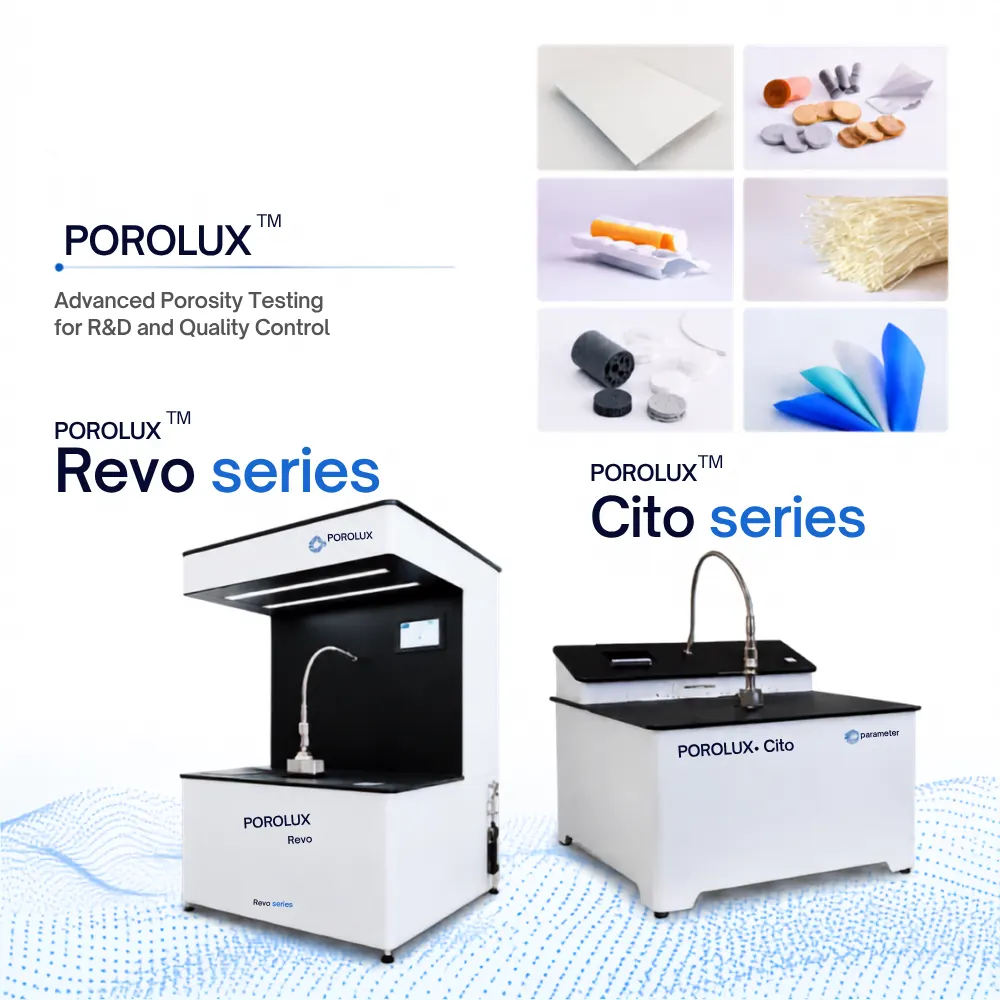
Recent Post

Weathering Chamber Quotation Checklist for Automotive Labs
Prepare a weathering chamber enquiry with the right standard, sample plan, exposure settings and installation details. A practical quotation checklist...
Read More
Automotive Weathering Testing: Xenon vs UV Explained
An easy introduction to automotive weathering testing: why paints fade, which vehicle materials are tested, and the difference between xenon...
Read More
Dynamic Climate Chamber vs. Drying and Heating Chamber: How to Choose the Right One
If you work in packaging quality control, you've almost certainly come across the term WVTR.
Read More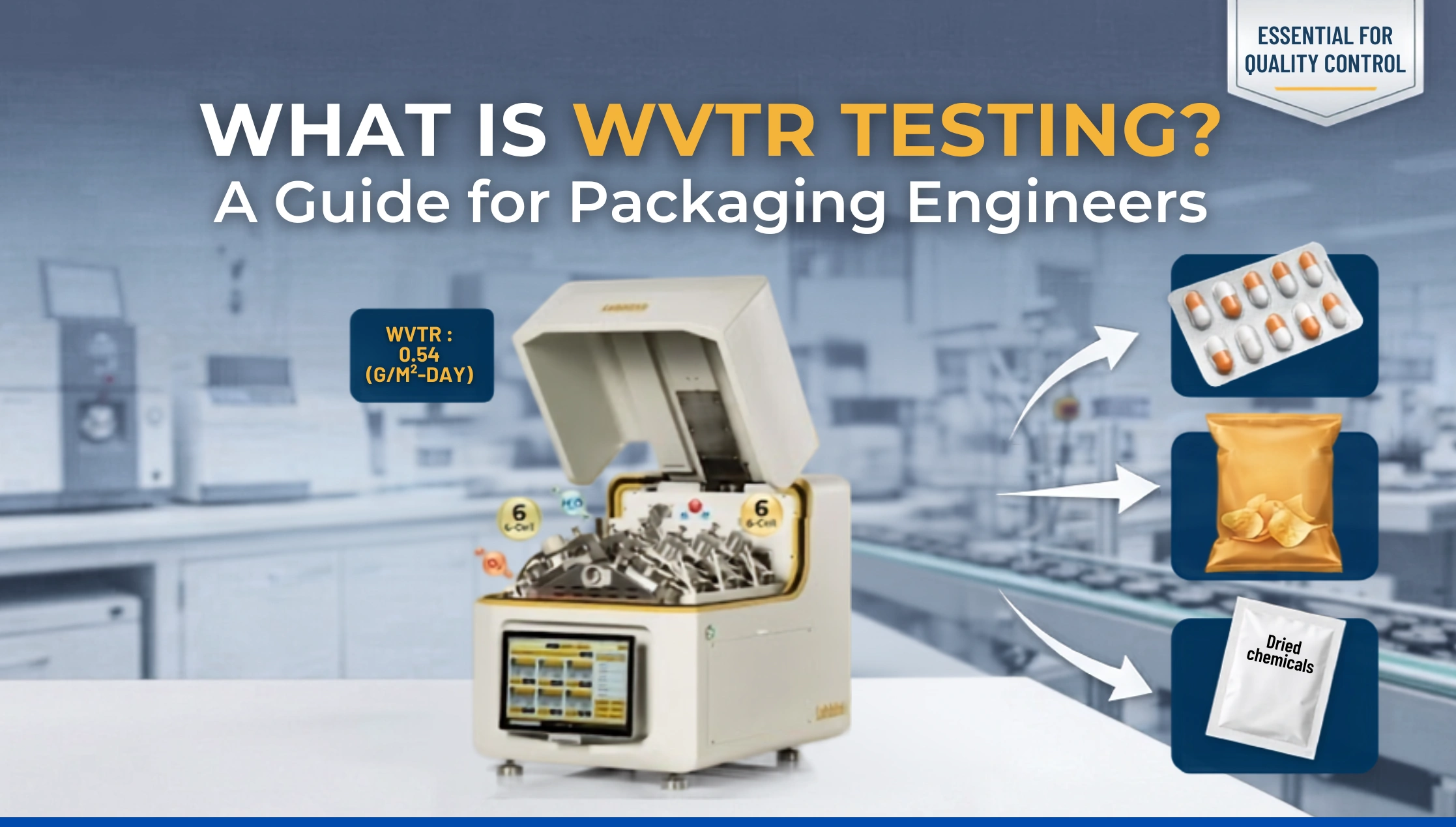
What is WVTR Testing? A Complete Guide for Packaging Engineers
If you work in packaging quality control, you've almost certainly come across the term WVTR.
Read More