
- Complete Technical Guide
What is WVTR Testing? A Complete Guide for Packaging Engineers
Understand Water Vapour Transmission Rate, testing methods, standards, test conditions, and how to choose the right WVTR tester for your packaging application.
If you work in packaging quality control, you’ve almost certainly come across the term WVTR.
A packaging film may look perfect, seal properly, and pass visual inspection-yet still allow enough moisture to reduce product shelf life. WVTR testing helps packaging engineers quantify how effectively a material resists water vapour under controlled temperature and humidity conditions.
Whether you’re testing flexible films for food packaging, pharmaceutical blister packs, or industrial laminates, Water Vapour Transmission Rate (WVTR) is one of the most important parameters you need to measure – and understand.
In this guide, we explain exactly what WVTR testing is, how it works, which test standards apply, what the numbers mean, and how to choose the right instrument for your application.
- 📌 Quick Summary
- WVTR = rate of water vapour passing through a material over time
- Key standards: ASTM E96, ASTM F1249, ISO 15106-1 / 15106-2
- Critical for: food, pharma, flexible laminates, pouch manufacturing
- Lower WVTR = better moisture barrier = longer shelf life
- Two main methods: Gravimetric (cup) and IR / Electrolytic Sensor
- Unit: g/m²/day (grams per square metre per day)
What does WVTR mean?
WVTR stands for Water Vapour Transmission Rate. It measures the amount of water vapour that passes through a unit area of a material in a given time under specific conditions of temperature and humidity.
The standard unit for WVTR is g/m²/day (grams per square metre per day). A lower WVTR value means the material is a better moisture barrier.
| WVTR Value | Barrier Level | Typical Application |
|---|---|---|
| < 0.1 g/m²/day | Ultra-high barrier | Pharmaceutical blisters, sterile medical packaging |
| 0.1 – 1.0 g/m²/day | High barrier | Snack food pouches, meat packaging, retort pouches |
| 1.0 – 10 g/m²/day | Medium barrier | General flexible packaging, coffee pouches |
| > 10 g/m²/day | Low barrier | Industrial wrapping films, non-food applications |
Note: WVTR values cannot be compared directly unless the test method, temperature, relative humidity, specimen thickness, and test area are considered.
Why does WVTR matter for packaging?
Moisture is one of the primary causes of product degradation.
It leads to microbial growth, oxidation, clumping of powders, loss of crispness, and reduced drug efficacy. Packaging materials are the first line of defence.
- Getting the WVTR of your packaging material wrong can result in:
- Shortened shelf life of food or pharmaceutical products
- Failed regulatory compliance (FSSAI, FDA, EU packaging regulations)
- Customer complaints and costly product recalls
- Loss of brand trust and market share
WVTR testing gives you a quantifiable, reproducible measurement that lets your packaging development team choose the right film, verify supplier quality, and demonstrate compliance to customers and regulators.
How is WVTR testing done?
There are three principal methods used globally for WVTR measurement:
A test specimen is sealed over a cup containing a desiccant or water. Placed in a controlled temperature and humidity environment, the cup is periodically weighed. The change in weight over time gives the WVTR.
The film specimen separates a dry nitrogen stream from a humid air stream. Water vapour passing through the film is detected by an infrared sensor - fast and accurate for high-barrier films.
Water vapour permeating through the film is absorbed by a phosphorus pentoxide electrolytic cell, generating a measurable current. Used for ultra-high-barrier applications. Can measure WVTR as low as 0.0001 g/m²/day.
| Method | Best For | Speed | Sensitivity |
|---|---|---|---|
|
⚖️
Gravimetric
|
General materials | 🐢 Slow | ◎ Moderate |
|
📡
IR Sensor
|
Packaging films | ⚡ Fast | ▲ High |
|
⚗️
Electrolytic
|
High-barrier materials | ⚡ Fast | ★ Very High |
Test conditions - temperature and humidity
WVTR values are strongly influenced by temperature and relative humidity (RH). Always report your test conditions alongside the WVTR value.
| Condition | Temperature | Relative Humidity | Typical Use Case |
|---|---|---|---|
| Standard | 23°C | 50% RH | General packaging, Europe / ISO default |
| Tropical | 38°C | 90% RH | Pharma (ICH Zone IVb), food in tropical climates |
| Accelerated | 40°C | 75% RH | Pharma (ICH Zone III/IV standard) |
Which films and materials are tested?
- WVTR testing applies to virtually any flexible barrier material:
- Flexible packaging films: BOPP, PET, PE, PA (Nylon), EVOH multilayer laminates
- Aluminium foil laminates and metalized films
- Pharmaceutical blister foils and alu-alu laminates
- Paper and paperboard with barrier coatings
- Pouches and sachets (food, personal care, industrial)
- Breathable membranes and technical textiles
- Agricultural mulch films
WVTR vs OTR - what's the difference?
WVTR and OTR are the two most important barrier properties in flexible packaging – and they are often tested together.
Many food and pharmaceutical products are sensitive to both moisture and oxygen. For example, a product may require low WVTR to prevent moisture absorption and low OTR to reduce oxidation. In such applications, evaluating both properties provides a more complete understanding of packaging barrier performance.
| Parameter | WVTR | OTR |
|---|---|---|
| Full name | Water Vapour Transmission Rate | Oxygen Transmission Rate |
| What it measures | Moisture passing through film | Oxygen passing through film |
| Unit | g/m²/day | cc/m²/day (or mL/m²/day) |
| Key standard | ASTM E96, ASTM F1249, ISO 15106 | ASTM D3985, ISO 15105-2 |
| Critical for | Biscuits, pharma, hygroscopic powders | Meat, coffee, cheese, chips |
| Detection method | Gravimetric, IR sensor, Coulometric | Coulometric, IR sensor |
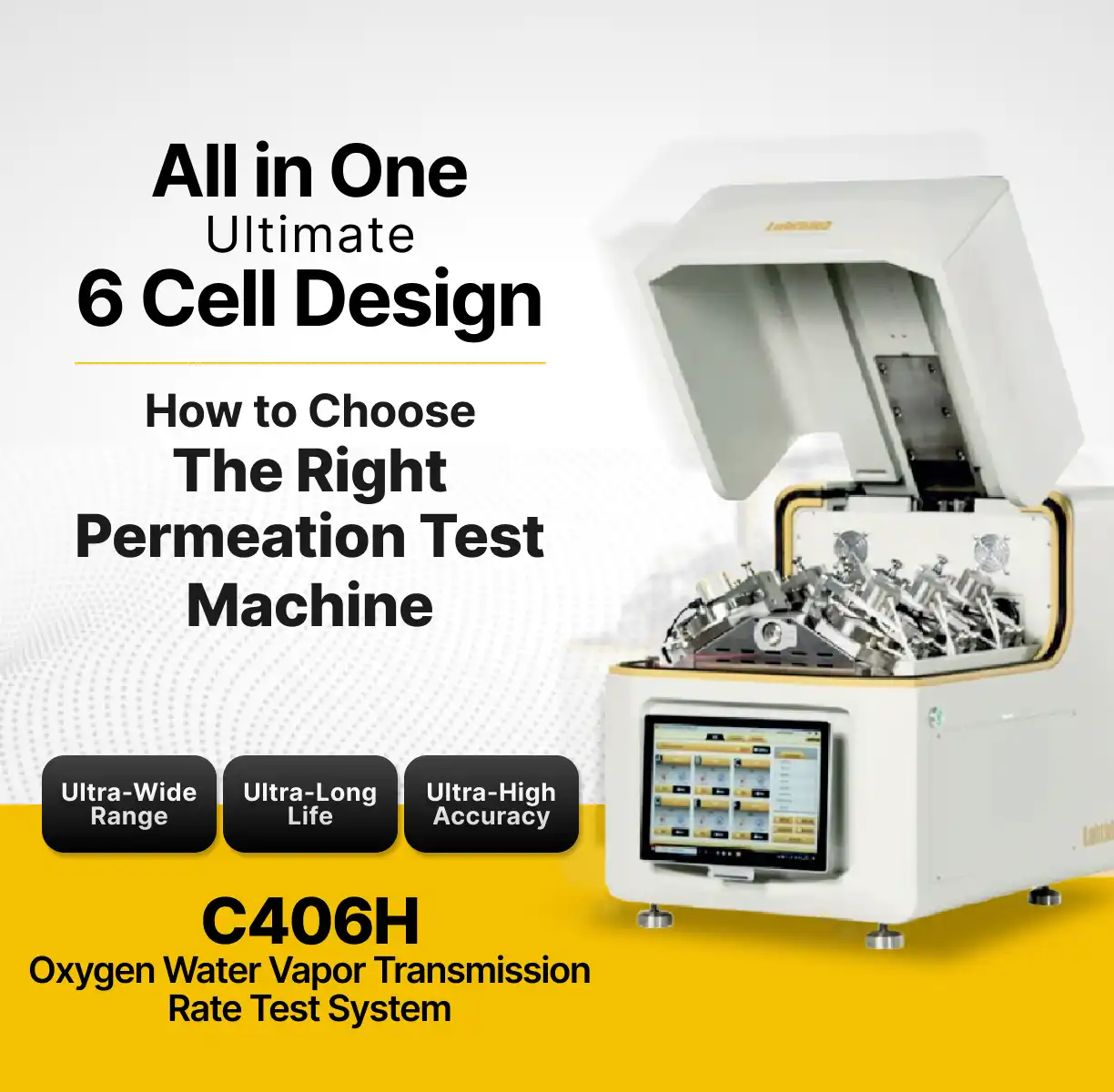
Many packaging labs test both WVTR and OTR together. Multi-parameter combo instruments – like the Labthink Combo Tester C406H – are designed to measure both on one platform.
WVTR testing standards - quick reference
The right instrument depends on three factors: the barrier level of your material, the test standard required by your customer or regulator, and your throughput needs.

General flexible packaging

Application : High-barrier laminates, food pouches

Application : Pharmaceutical blisters, alu-alu foil

Application : WVTR + OTR on one unit
Flexitest is the authorised distributor of Labthink permeability testing instruments in India. Our application engineers can help you select the right model for your specific films, standards, and test conditions.
How to choose a WVTR tester
The right instrument depends on three factors: the barrier level of your material, the test standard required by your customer or regulator, and your throughput needs.
WVTR testing standards - quick reference
FAQ's
Frequently Asked Questions (FAQs) – Common questions from QC managers, procurement officers, and R&D teams.
What is a good WVTR value for food packaging?
It depends on the product. For moisture-sensitive foods like biscuits, chips, or powders, a WVTR below 1.0 g/m²/day is generally required. For products like fresh produce that need some breathability, a higher WVTR may be acceptable or even desirable.
What is the difference between WVTR and MVTR?
How long does a WVTR test take?
Gravimetric (cup) method tests typically take 24 to 72 hours per cycle. Modern infrared sensor instruments like the Labthink W3/230 can produce results in 2–6 hours for most packaging films, significantly reducing lab turnaround time.
Can WVTR be tested on pouches and finished packaging?
Standard WVTR tests are performed on flat film specimens. For finished pouches, the whole-package transmission rate can be determined using a headspace or sealed-pouch method – a different but related measurement. For most QC and supplier qualification purposes, flat film testing is standard practice.
Is WVTR testing required for export packaging?
Many export markets – particularly in Europe, the US, and Middle East – require suppliers to submit WVTR test data as part of material qualification. Pharmaceutical packaging exported to regulated markets must meet ICH Q1A stability guidelines, which specify temperature and humidity conditions for packaging material testing.
Need a WVTR tester for your lab?
Flexitest supplies Labthink permeability testing instruments across India gravimetric, IR sensor, electrolytic, and combo models.
NABL-traceable calibration
Free installation & demo
24/7 online support
or emailinfo@flexitest.in · www.flexitest.in
Recent Post

Weathering Chamber Quotation Checklist for Automotive Labs
Prepare a weathering chamber enquiry with the right standard, sample plan, exposure settings and installation details. A practical quotation checklist...
Read More
Automotive Weathering Testing: Xenon vs UV Explained
An easy introduction to automotive weathering testing: why paints fade, which vehicle materials are tested, and the difference between xenon...
Read More
Dynamic Climate Chamber vs. Drying and Heating Chamber: How to Choose the Right One
If you work in packaging quality control, you've almost certainly come across the term WVTR.
Read More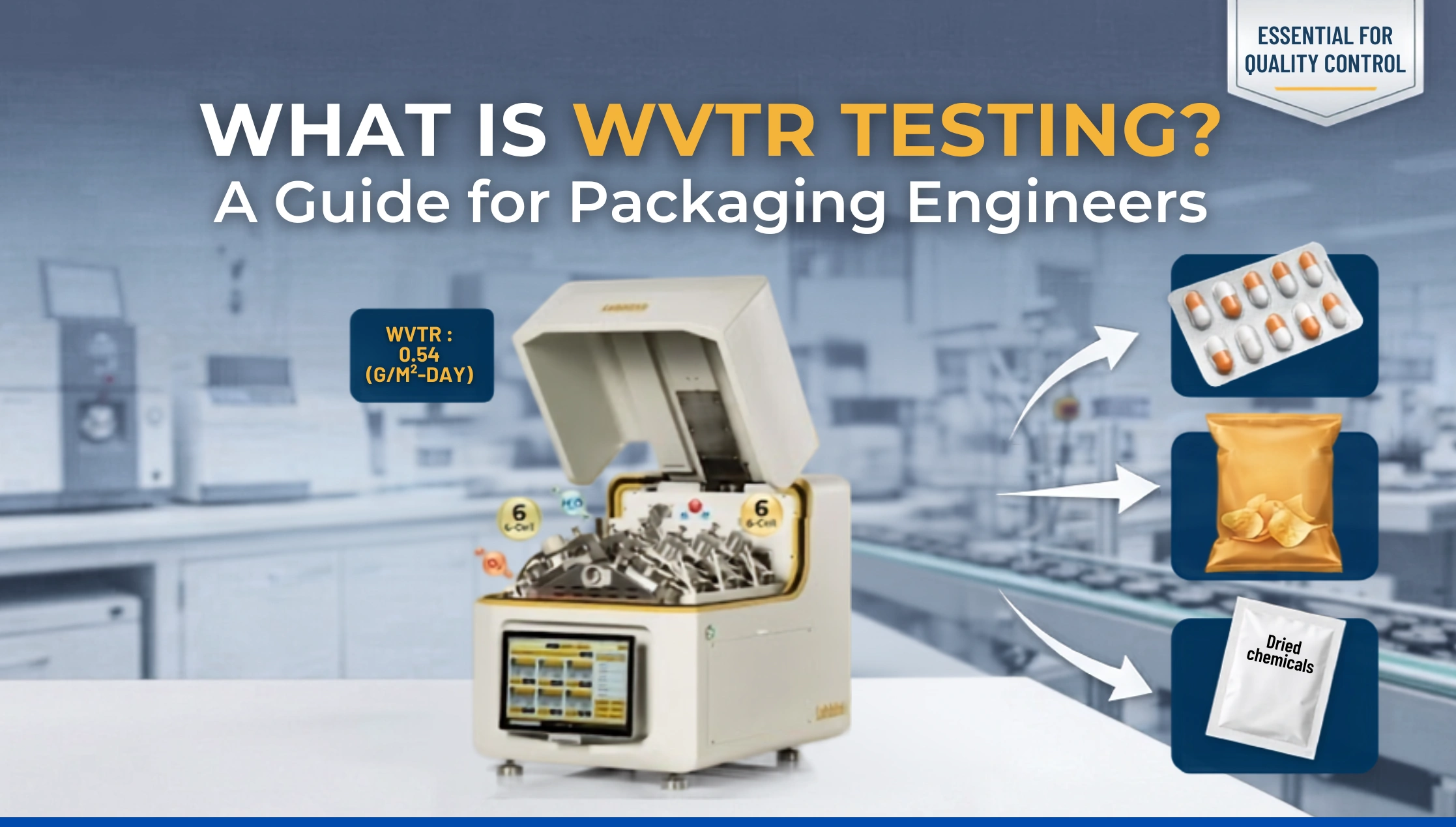
What is WVTR Testing? A Complete Guide for Packaging Engineers
If you work in packaging quality control, you've almost certainly come across the term WVTR.
Read More