A practical guide for automotive teams
Automotive Weathering Testing: Xenon vs UV Explained
Why do paints fade and plastics lose their finish? Understand the tests that help you choose materials for life on a vehicle.
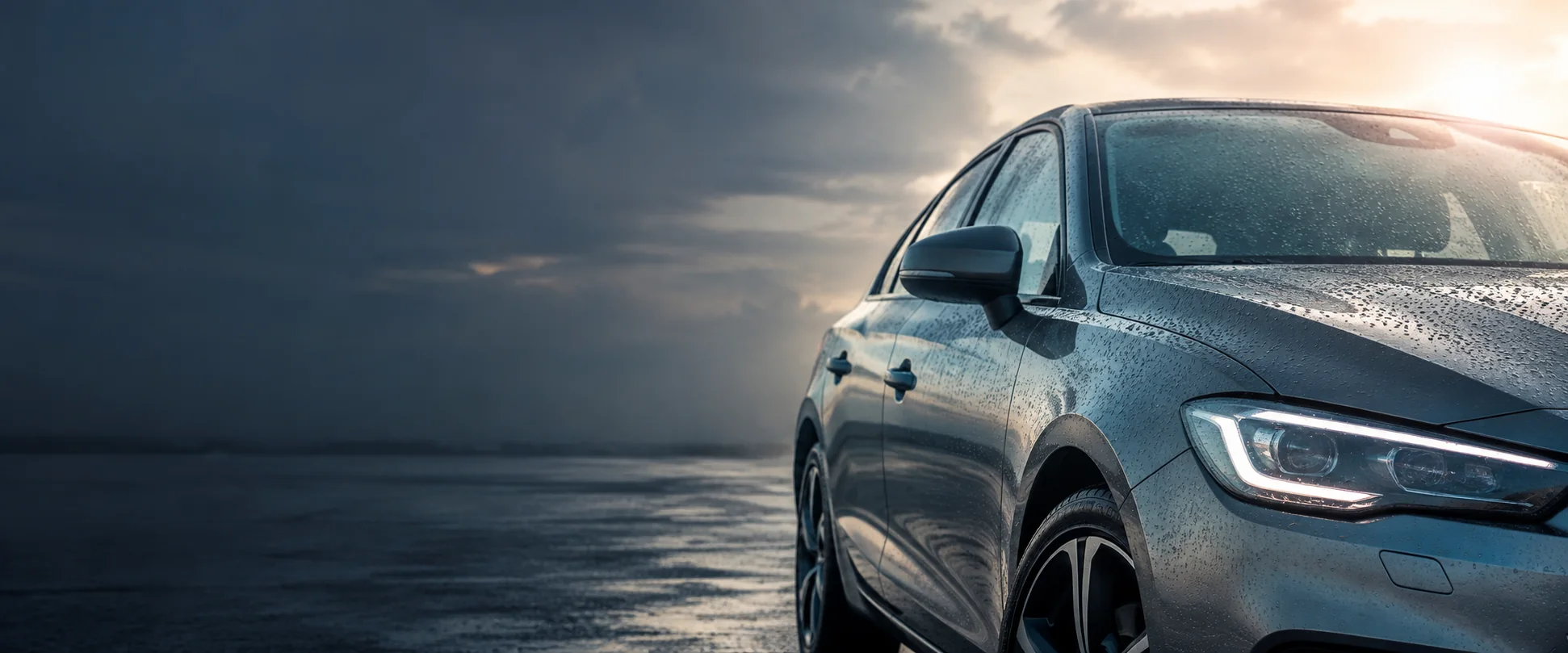
A car lives outdoors.
Its materials need to cope.
Automotive weathering testing studies how materials change under controlled exposure to light, heat and moisture.
Think of a car parked outside every day. Its paint, plastic trims and interior surfaces receive sunlight and heat. Rain and moisture add another challenge for the parts on the outside.
Colours may fade, coatings may lose their shine, and some plastics may develop cracks. An accelerated weathering chamber helps a laboratory compare these changes using a planned exposure cycle.
Xenon vs UV:
compare the light reaching your sample.
A dashboard fading behind glass and a bumper trim cracking outdoors pose different questions. To choose the exposure, look at which wavelengths reach the material and how much light it receives.
- Spectrum & wavelength
- The mix of light in the test. Wavelength is measured in nanometres (nm).
- Irradiance
- The radiant power reaching a unit area of the sample. Always read the value together with its wavelength or band.
Xenon arc
For studying material changes under a broader sunlight spectrum.
Which wavelengths?
Filtered xenon includes UV, visible light and infrared. A daylight-filtered exposure can begin near 295 nm and extend through the visible region into infrared. The shortest wavelengths reaching the sample depend on the filter.
Why the filter matters
Daylight filters represent direct outdoor sunlight. Window-glass filters remove more short-wave UV to represent light passing through glass. Some automotive methods specify extended-UV or other particular filters, so use the customer’s required filter system.
Where irradiance is controlled
340 nm or 420 nm, or a band such as 300–400 nm, depending on the method and instrument configuration. A 340 nm control point does not mean the lamp emits only 340 nm light.
On a vehicleCompare paint colour and gloss, or fading in dashboard, door-trim and upholstery materials under the required glazing exposure.
Relevant references: ASTM G155, ISO 4892-2, ISO 16474-2, SAE J2412 and SAE J2527.
Fluorescent UV
For studying UV-driven deterioration with the specified heat and moisture cycle.
UVA-340: a sunlight UV match
UVA-340 lamps closely match the short-wave UV portion of sunlight over approximately 295–365 nm. This is the sunlight-matching region; the lamp can emit at other wavelengths too.
UVB-313: shorter wavelengths
UVB-313 lamps concentrate their output around 280–360 nm, with a peak near 313 nm. They include wavelengths below about 295 nm, the lower limit normally present in sunlight at ground level. This can accelerate damage but may also produce failures that outdoor sunlight would not.
Where irradiance is controlled
UVA-340 is commonly controlled at 340 nm. UVB control may be at 310 or 313 nm, depending on the instrument and method. Check the specified control point; the lamp name alone is not enough.
On a vehicleCompare cracking, chalking or loss of gloss in exterior plastics and coatings under a specified UV, temperature and wet cycle.
Relevant references: ASTM G154, ISO 4892-3 and ASTM D4587.
What does an irradiance level actually tell you?
Consider 0.55 W/m²/nm at 340 nm. This describes spectral irradiance at a specified UV wavelength. It does not describe the lamp’s electrical wattage or the total light across its spectrum.
Examples you may encounter in test methods
These are method examples, not universal settings or Flexitest chamber operating limits. Confirm the standard edition, complete cycle and required configuration before testing.
Bring the light settings into your chamber shortlist.
For a Flexitest xenon or UV chamber, share the lamp or filter, irradiance value and units, control wavelength or band, test cycle and sample size. We can review the proposed configuration against your customer’s requirement.
Explore the Flexitest chamber optionsDifferent parts.
Different durability questions.
Start with where the material is used and the change that would matter to the customer.
Paints & coatings
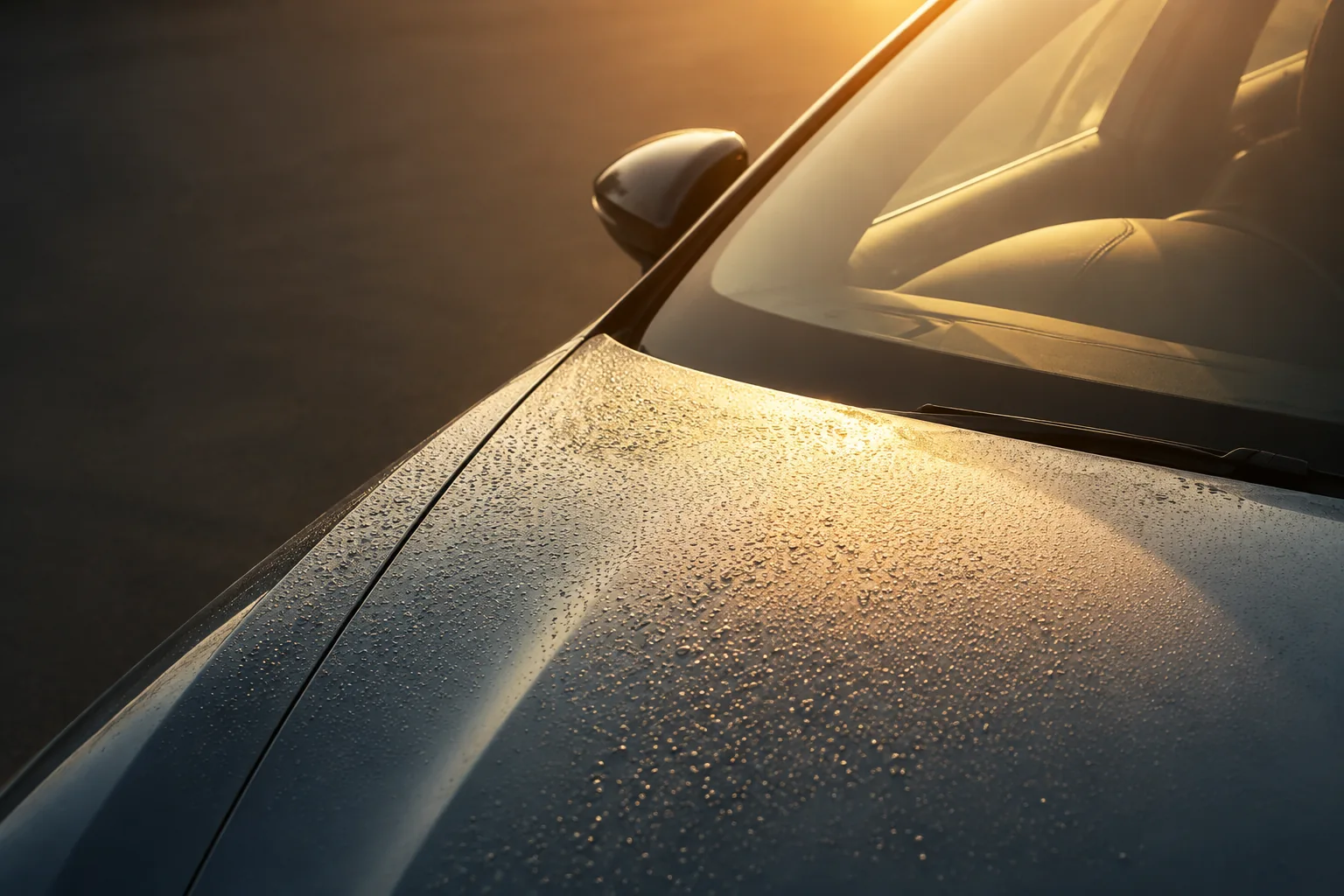
Where: body panels, painted components and protective finishes.
What to check: colour change, loss of gloss, cracking or changes in surface appearance.
Exterior plastics
Where: bumper trims, mirror housings and exposed plastic components.
What to check: fading, surface deterioration and changes in relevant material properties.
Interior materials
Where: dashboards, door trims, upholstery and decorative surfaces.
What to check: changes in colour and appearance under the specified light and heat exposure.
Automotive manufacturers, component suppliers, paint and polymer developers, and quality-control laboratories use these comparisons to inform material decisions.
How does the test work?
The chamber creates the exposure. Your agreed evaluations establish the result.
- Prepare the samples.Use representative pieces of the material, coating or component, prepared as the method requires.
- Set the exposure.Record the lamp or filter, irradiance with its control wavelength or band, temperature and wet stages from the agreed test cycle.
- Run the cycle.Expose the samples for the specified duration or exposure endpoint.
- Compare the changes.Assess colour, gloss, visible damage or other properties relevant to the application.
Which standard does
your customer need?
The standard helps define the exposure. The material specification and customer requirement also determine the cycle, evaluation and acceptance limits.
| Standard | What it covers | Exposure |
|---|---|---|
| ASTM G155 | Operating xenon arc exposure equipment | Xenon arc |
| ISO 4892-2 | Xenon exposure of plastics, including daylight and window-glass-filtered light | Xenon arc |
| ISO 16474-2 | Xenon exposure of paints and varnishes | Xenon arc |
| SAE J2412 | Automotive interior trim materials | Controlled-irradiance xenon arc |
| SAE J2527 | Automotive exterior materials | Controlled-irradiance xenon arc |
| ASTM G154 | Operating fluorescent UV exposure equipment | Fluorescent UV |
| ISO 4892-3 | Fluorescent UV exposure of plastics | Fluorescent UV |
| ASTM D4587 | UV and condensation exposure of paints and related coatings | Fluorescent UV |
A chamber format
for your laboratory's workload.
Start with the exposure your customer requires: lamp or filter, irradiance level and control wavelength. Then compare sample capacity and installation space. Flexitest can check the proposed model and configuration against that complete requirement.
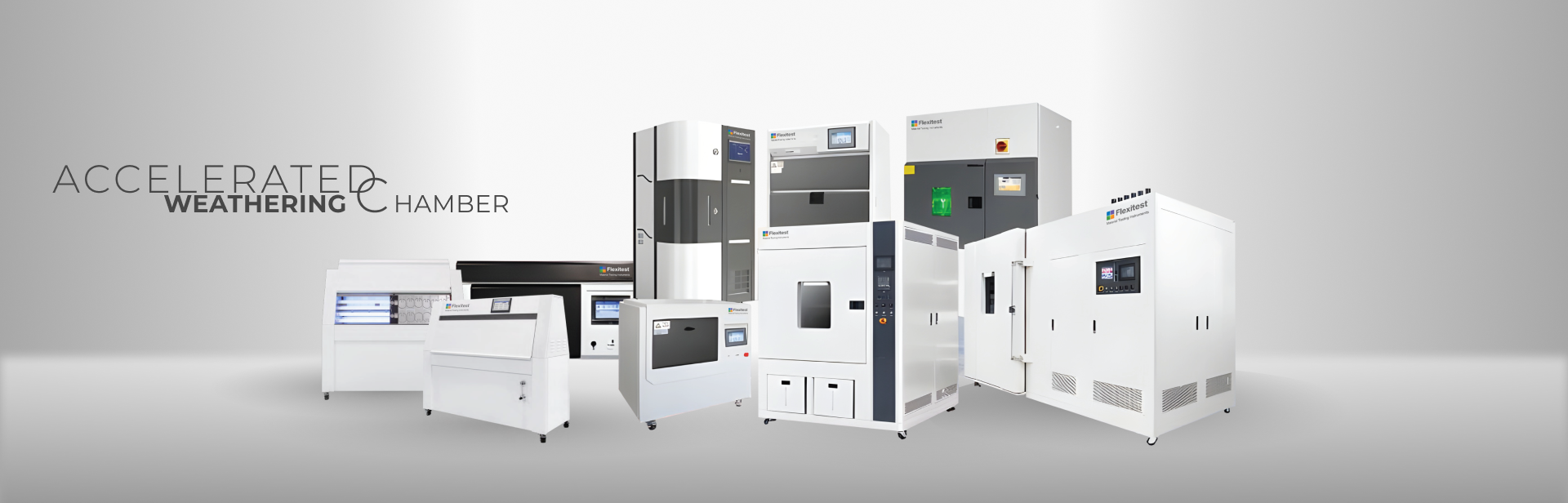

SX/1000
Benchtop xenon chamber
Compare a smaller set of flat specimens under filtered xenon exposure.
9 samples · 150 × 70 mm
View SX/1000 details →
SX/6500/H
Larger-capacity xenon chamber
Accommodate larger comparison programmes with a rotating sample rack.
63–65 samples · 150 × 70 mm
View SX/6500/H details →
ST/UV/A
Floor-standing UV chamber
Compare materials with fluorescent UV exposure in a floor-standing format.
48 samples · 150 × 70 mm
View ST/UV/A details →
SB/UV/A
Benchtop UV chamber
Bring fluorescent UV exposure to a smaller laboratory footprint.
18 samples · 150 × 70 mm
View SB/UV/A details →Listed capacities apply to 150 × 70 mm specimens. Controls and repeat specimens occupy positions within those totals. Other sizes, shaped parts and holder arrangements require a separate capacity check.
Start with three
straightforward questions.
- What are you testing?
- An exterior plastic trim, a painted panel or an interior fabric? Share sample dimensions and the expected batch size.
- What change matters?
- Fading, loss of shine, cracking or another performance concern? Identify the result you need to compare.
- What does the customer require?
- Share the standard, edition and cycle, including lamp or filter, irradiance with units and control wavelength, and the material's acceptance criteria.
Turn your requirement into a chamber shortlist.
Flexitest can help you review xenon and UV options around your application, test cycle and sample workload.
Discuss your application Explore weathering chambersQuestions from automotive teams
Why test a dashboard or door trim if it stays inside the vehicle?
Interior materials still receive light and heat through the glazing. A dashboard surface, door trim or upholstery material can change in colour or appearance during use. Testing helps a supplier compare finishes or formulations before selecting a material for production.
SAE J2412 addresses xenon exposure of automotive interior trim. ISO 4892-2 may also appear in a plastics specification. The chosen filter and cycle must match the customer’s requirement; an interior test should not simply copy the conditions used for an exterior component.
What can weathering testing tell us about exterior automotive parts?
It helps reveal changes that affect appearance and material durability. Think of a black exterior moulding losing its finish, a painted surface losing gloss, or a plastic surface developing cracks. A controlled exposure lets the team evaluate candidate materials under a defined set of conditions.
SAE J2527 covers xenon exposure of automotive exterior materials. The customer’s specification determines the exposure and the checks required afterwards. A weathering result answers the chosen light, heat and moisture question; separate tests may still be needed for other service conditions.
Do a plastic trim part and a painted panel use the same testing standard?
They may use the same type of light source but different material-specific methods. ISO 4892-2 and ISO 4892-3 cover plastics exposed to xenon and fluorescent UV respectively. ISO 16474-2 covers xenon exposure of paints and varnishes; ASTM D4587 covers UV and condensation exposure of paints and related coatings.
ASTM G155 and ASTM G154 describe how the respective exposure apparatus is operated. They do not, by themselves, tell you how much fading or cracking your customer will accept. Ask for the material specification as well as the exposure standard.
What does a useful weathering test result look like?
It connects a measured change to a practical decision. For two dashboard finishes, that might mean comparing colour change after the same agreed exposure. For exterior paint, it could mean checking gloss retention and visible surface damage. Relevant mechanical tests may also be needed when strength is part of the requirement.
Record the starting condition, exposure settings and evaluation method so the comparison is clear. A chamber does not automatically produce a durability pass: the results must be assessed against the customer’s acceptance criteria.
If a sample survives 1,000 hours, how long will it last on a car?
There is no fixed hours-to-years answer. Sunlight, temperature, moisture, location and the material itself influence outdoor ageing. A laboratory cycle also exposes the sample in a particular way, so a simple multiplication can give a misleading lifespan claim.
The useful question is whether the material meets the agreed requirement or performs better than an alternative in a controlled comparison. Predicting service life requires evidence linking laboratory exposure with real-world behaviour for that material and application.
Why might the same material behave differently in xenon and UV tests?
The same reading at one wavelength can come from two different spectra. For example, matching xenon and UVA-340 at 340 nm does not match their total light or their visible-light exposure. Filtered xenon includes UV, visible and infrared; ordinary UVA/UVB weathering lamps focus on UV. Temperature and wet stages also influence the result.
For plastics, ISO 4892-2 and ISO 4892-3 distinguish these two exposure methods. Use the customer’s specified method and lamp choice when comparing materials. A more severe-looking result is not automatically a better prediction of vehicle service life.
Does a weathering test also show whether interior materials will cause windscreen fogging?
No—these tests answer different questions. Weathering examines changes caused by light, heat and moisture exposure, such as fading or surface deterioration. Fogging testing examines substances released from heated interior materials that can condense on a cooler surface.
For a dashboard covering or upholstery material, a development programme may need both appearance-durability and fogging results. Passing one test does not establish performance in the other; follow the separate requirements in the customer’s material specification.
How can an automotive supplier start a first weathering test programme?
Start with one component and one clear question. Are you comparing two trim colours, checking a coating change, or assessing an exterior plastic formulation? Obtain the customer’s standard, edition and cycle, then agree the sample preparation, exposure endpoint and measurements needed to make the decision.
Share this brief and your sample sizes with Flexitest. The range includes SX/1000 and SX/6500/H xenon chambers, plus ST/UV/A and SB/UV/A fluorescent UV chambers. Flexitest can review the required exposure and sample arrangement to help identify a suitable configuration.